

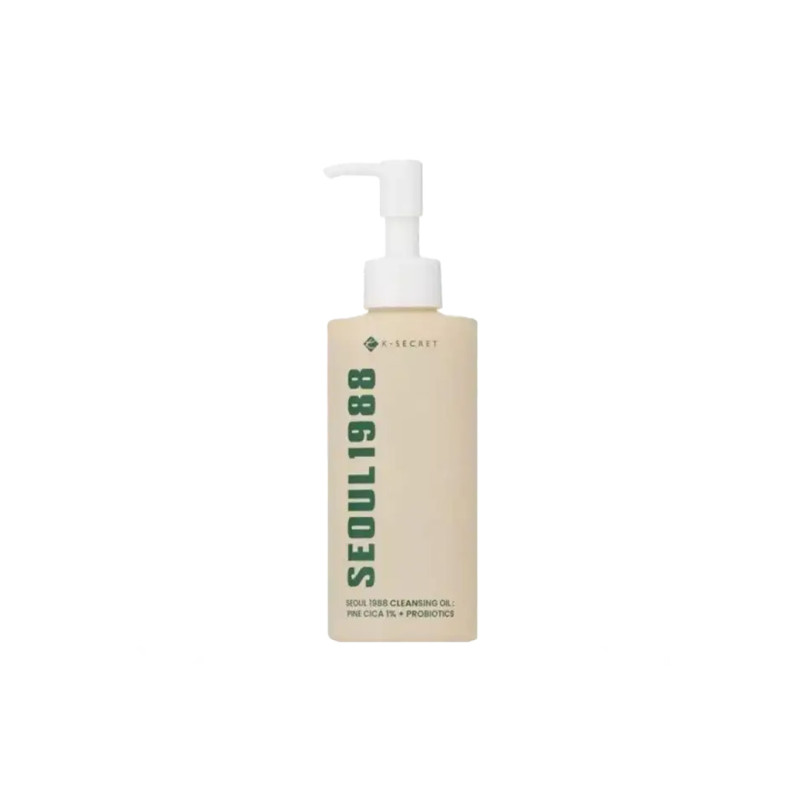
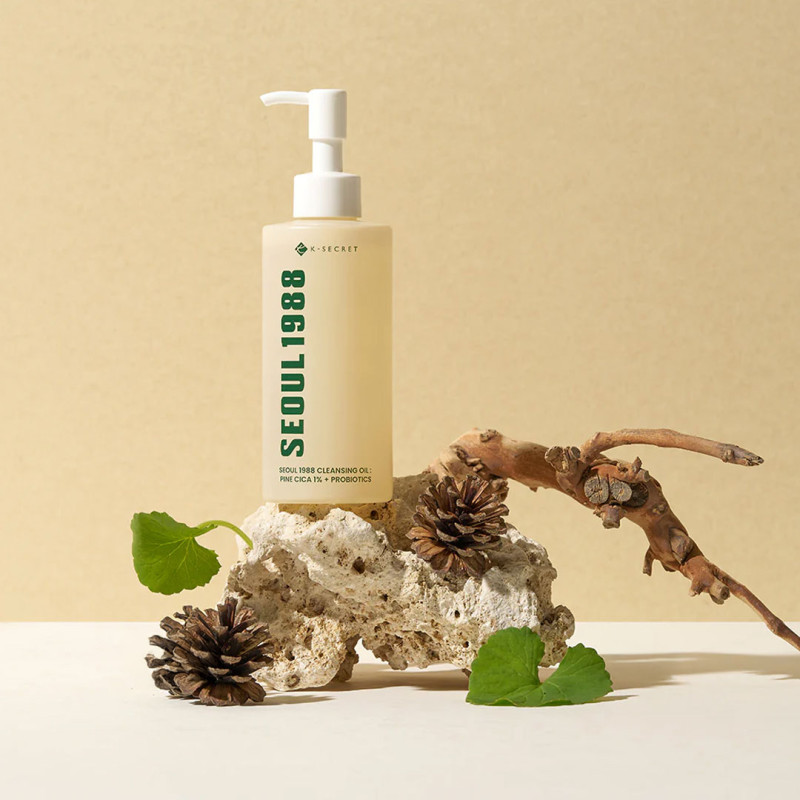
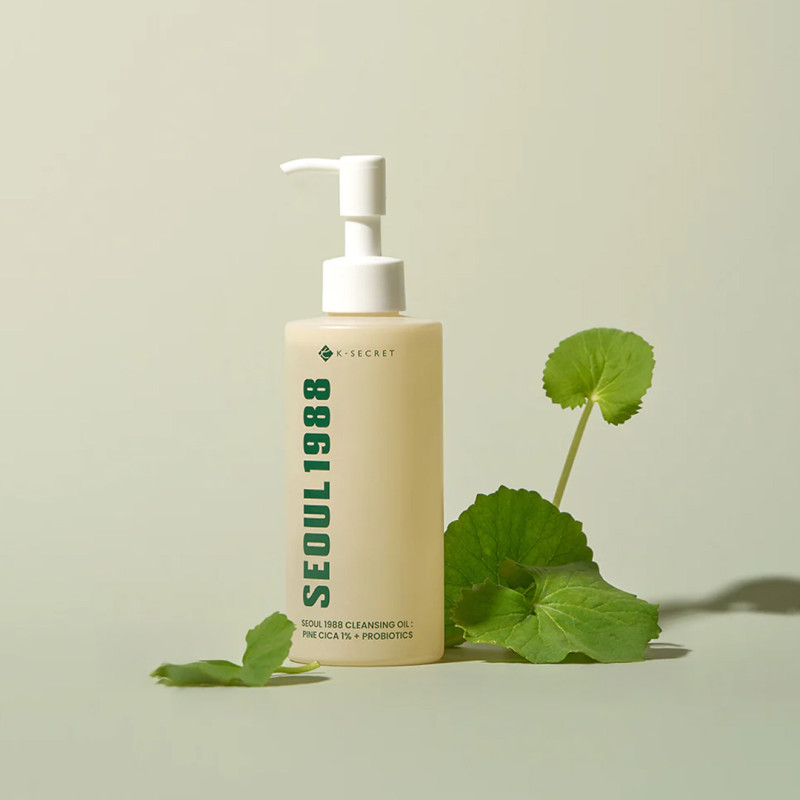
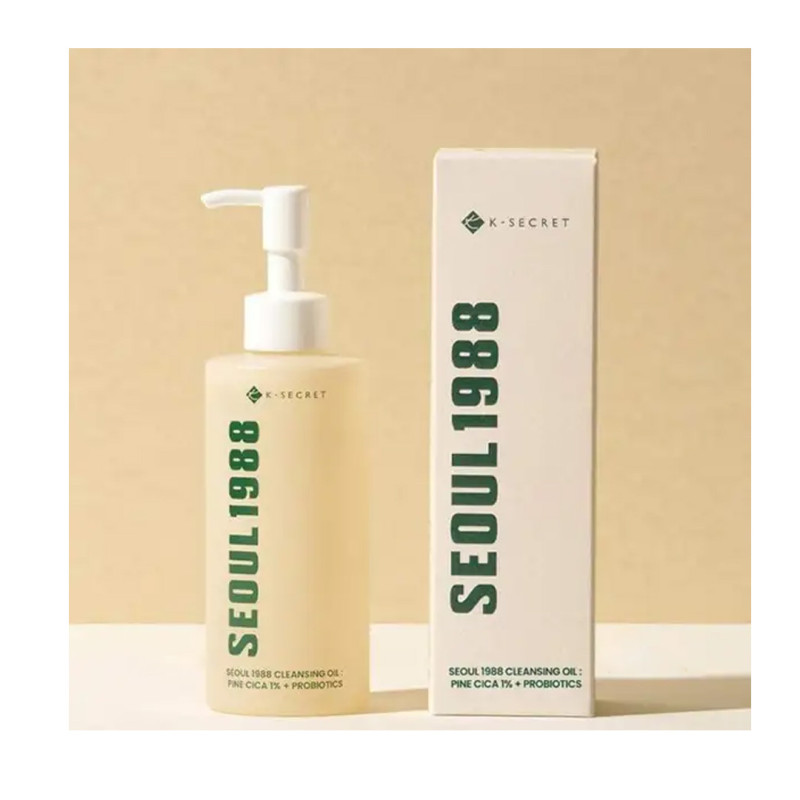
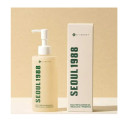
K-Secret Seoul 1988 Cleansing Oil: Pine Cica 1% + Probiotics 200 ml
৳1,900
K-Secret Seoul 1988 Cleansing Oil: Pine Cica 1% + Probiotics মেকআপ, সানস্ক্রিন ও অতিরিক্ত সিবাম পরিষ্কার করতে সাহায্য করে। Pine Cica, Centella Asiatica ও ফারমেন্ট উপাদান ত্বককে আরামদায়ক রাখে।
- Brand: Innisfree
- Product Code:
- SKU: 8809695240560
- Availability: In Stock
Description
K-Secret Seoul 1988 Cleansing Oil: Pine Cica 1% + Probiotics is a Korean first-step cleansing oil that dissolves makeup, sunscreen and the day’s sebum, then rinses away clean when mixed with water.
What makes it unusual is where its named ingredients sit. Pine leaf extract is third in the ingredient list and Centella Asiatica fourth — directly behind the two cleansing agents, and above all five of the plant oils. For a cleansing oil, that is the highest position an active ingredient can realistically occupy.
The formula also carries the full Centella complex — all four of its main compounds listed individually — alongside Bifida Ferment Filtrate at sixth, five plant oils and glycerin.
Table of Contents
- Why Choose This Cleansing Oil?
- Pine Cica 1% — Where It Actually Sits
- What Actually Does the Cleansing
- Key Benefits
- The Full Centella Complex
- About the “Probiotics”
- Key Ingredients and Their Benefits
- Suitable Skin Types
- How to Use
- Recommended Skincare Routine
- Product Details
- Precautions
- Buy This Cleansing Oil in Bangladesh
- Official Source
- Frequently Asked Questions
Why Choose K-Secret Seoul 1988 Cleansing Oil?
Sunscreen is the reason most people need a cleansing oil. Water-resistant formulas are designed not to come off with water, and a foaming cleanser alone usually leaves a film behind — which is where congestion and dull-looking skin start.
K-Secret Seoul 1988 Cleansing Oil handles that first step, and does it with a short, legible formula of twenty-two ingredients.
Its cleansing work is done by Ethylhexyl Palmitate and Sorbeth-30 Tetraoleate in the first two positions — one dissolves oil-soluble makeup and sunscreen, the other lets the whole thing rinse off instead of sitting on your face.
Behind them, in the two highest positions an active can occupy in this product type, sit Pine leaf extract at third and Centella Asiatica at fourth. Bifida Ferment Filtrate follows at sixth, and the Centella complex’s four main compounds appear individually further down.
It is a first-step cleanser, used on dry skin before water. It is not a treatment for acne or any skin condition.
Pine Cica 1% — Where It Actually Sits
Products put numbers on their packaging constantly, and most of the time the ingredient list quietly disagrees. This one does not.
The Positions
| Position | Ingredient | Role |
| 1st | Ethylhexyl Palmitate | The cleansing ester |
| 2nd | Sorbeth-30 Tetraoleate | The emulsifier |
| 3rd | Pinus Densiflora Leaf Extract | The pine of “Pine Cica” |
| 4th | Centella Asiatica Extract | The cica of “Pine Cica” |
Why This Is Meaningful
In any cleansing oil, the first two slots are always taken by the cleansing agent and the emulsifier — they have to be, or the product would not work. Third and fourth is therefore as high as a botanical active can realistically sit.
Both are also placed above all five of the plant oils, which tells you the brand prioritised them over the ingredients most cleansing oils lead with on their marketing.
One Honest Limit
The 1% refers to the Pine Cica complex as a whole, and the brand does not publish how that 1% splits between the pine and the centella. We cannot tell you the individual figure for either, and we are not going to guess one.
What we can tell you is that the ingredient order supports the claim, which is more than can be said for a great many botanical percentage claims.
What Pine Extract Does
Pinus densiflora — Korean red pine — is a traditional Korean botanical used for its naturally occurring antioxidant compounds. In a cleanser it contributes conditioning character rather than treatment effects, but at third position it is genuinely present rather than decorative.
What Actually Does the Cleansing
The formula lists five plant oils, and it would be easy to assume they are what removes your makeup. They are not, and it is worth being clear about why.
The Two Ingredients That Do the Work
Ethylhexyl Palmitate (1st) is a light ester that dissolves oil-soluble makeup, sunscreen and sebum. It is the formula’s actual cleansing agent, and it is first for that reason.
Sorbeth-30 Tetraoleate (2nd) is the emulsifier — the ingredient that lets the oil mix with water and rinse away completely instead of leaving a greasy film. Without it you would be rubbing oil into your face and then struggling to get it off.
Where the Five Plant Oils Actually Sit
Sunflower, macadamia, olive, jojoba and grape seed oils occupy positions seven to eleven — below the Pine Cica complex, which means each of them is present at under one percent.
They contribute conditioning and skin feel. They are not the cleansing system.
Why We Mention It
Because “five plant-based oils” is a line that sells cleansing oils, and we would rather you knew what is doing what. The good news is that the formula is honest where it counts — the ingredients named on the bottle are the ones placed highest.
8 Key Benefits of K-Secret Seoul 1988 Cleansing Oil
- Pine and Centella at Third and Fourth: The named ingredients sit as high as actives can in a cleansing oil.
- Removes Sunscreen Properly: Dissolves water-resistant sunscreen and long-wear makeup that foaming cleansers leave behind.
- Clean Rinse-Off: The emulsifier at second position means no greasy film.
- Full Centella Complex: The extract plus all four of its main compounds, listed individually.
- Loosens Pore Buildup: Oil cleansing dissolves the sebum-based congestion water cannot reach.
- Fermented Ingredient at Sixth: Bifida Ferment Filtrate, placed above the plant oils.
- Short, Legible Formula: Twenty-two ingredients — easy to check against your own sensitivities.
- Comfortable Cleansing: Plant oils and glycerin leave skin soft rather than stripped.
The Full Centella Complex
Centella Asiatica is in nearly every Korean product, usually as a single line on an ingredient list. Here it is built out properly.
What Is Declared
- Centella Asiatica Extract — 4th
- Asiatic Acid — 15th
- Asiaticoside — 16th
- Madecassic Acid — 18th
- Madecassoside — 19th
Why Listing Them Separately Matters
Centella’s effects are attributed to these four compounds. A product that lists only “Centella Asiatica Extract” tells you nothing about how much of them is present. Naming all four individually indicates a deliberately built complex rather than a token extract.
What It Contributes Here
Skin-conditioning comfort during cleansing. In a rinse-off product, do not expect the soothing benefits of a leave-on centella serum — but it is a sensible inclusion in a first-step cleanser, where massaging and rinsing can leave skin feeling sensitised.
About the “Probiotics”
The product name says “+ Probiotics”, so this deserves a straight answer.
What Is Actually in the Formula
- Bifida Ferment Filtrate — 6th, a notably high placement, above all five plant oils.
- Lactobacillus/Soybean Ferment Extract — 22nd, the final ingredient in the list.
These Are Not Live Probiotics
A ferment filtrate is what is left after bacteria have fermented a medium and the bacteria themselves have been filtered out. It contains the by-products of fermentation — peptides, amino acids, organic acids — but not living microorganisms.
No cosmetic cleanser contains live probiotic bacteria, and none could survive a preserved formula or a rinse-off product anyway. We are not claiming otherwise.
So What Do They Do?
Bifida ferment filtrate is a well-regarded skin-conditioning ingredient in its own right, and at sixth position it is genuinely present. Read it as a conditioning ingredient, not as a microbiome treatment.
The lactobacillus ferment at the very end of the list is a much smaller inclusion.
Key Ingredients and Their Benefits
Ethylhexyl Palmitate — 1st
A light ester that dissolves oil-soluble makeup, sunscreen and sebum. The formula’s cleansing agent. Note for acne-prone skin: this ingredient has a mixed reputation for congestion. In a product rinsed off within a minute the risk is lower, but it is worth knowing if your skin congests easily.
Sorbeth-30 Tetraoleate — 2nd
The emulsifier that lets the oil turn milky with water and rinse away completely. This is the ingredient that determines whether a cleansing oil feels clean or greasy afterwards.
Pinus Densiflora Leaf Extract — 3rd
Korean red pine leaf, the “pine” of Pine Cica. A traditional Korean botanical with naturally occurring antioxidant compounds.
Centella Asiatica Extract — 4th
The “cica”, supported by its four main compounds further down the list.
Bifida Ferment Filtrate — 6th
A fermentation-derived conditioning ingredient, placed above all the plant oils.
The Five Plant Oils — 7th to 11th
Sunflower, macadamia, olive, jojoba and grape seed oils. Each below one percent, contributing conditioning and skin feel rather than cleansing power.
Vegetable Oil — 12th
A general INCI term that does not specify which plant oils it covers. If you have a specific seed or nut sensitivity, this is the entry to ask the brand about.
Glycoproteins — 17th
A conditioning ingredient derived from protein-sugar compounds, contributing to the formula’s skin feel.
Glycerin — 21st
A humectant, low in the list as expected in an oil-based product.
Which Skin Types Can Use This Cleansing Oil?
- Anyone Who Wears Sunscreen Daily: The clearest use — this is what an oil cleanser is for.
- Makeup Wearers: Dissolves base makeup without scrubbing.
- Oily Skin: Oil dissolves oil — this removes sebum that water-based cleansers cannot.
- Combination Skin: Works across the face without stripping drier areas.
- Dry Skin: Oil cleansing is gentler than foaming alone.
- Congested Pores: Loosens the sebum-based buildup behind blackheads.
- Sensitive Skin: The centella complex helps, and twenty-two ingredients is short enough to read in full. Patch-test first.
- Normal Skin: A straightforward first-step cleanser.
- Acne-Prone Skin: Usable, but Ethylhexyl Palmitate at first position does not suit everyone. Watch your skin’s response for the first fortnight.
- Specific Nut or Seed Allergies: Check the list — it contains macadamia, and the “Vegetable Oil” entry is unspecified.
How to Use K-Secret Seoul 1988 Cleansing Oil
- Start with completely dry hands and a dry face. This is the step most people get wrong.
- Pump an appropriate amount into dry palms.
- Spread over the face and massage gently for thirty to sixty seconds.
- Work the areas that need it — the nose, the chin, along the jaw, and wherever you applied the most sunscreen.
- Do not scrub, and avoid getting it directly into the eyes.
- Add a little lukewarm water and keep massaging until the oil turns milky white.
- Continue for several seconds after it emulsifies.
- Rinse thoroughly with lukewarm water until no slip remains.
- Follow with a water-based cleanser to complete the double cleanse.
- Continue with toner, serum and moisturizer.
Dry skin, dry hands. Wet skin stops the oil from binding to sunscreen and makeup, which is why people conclude a cleansing oil “does not work”.
Do not skip the emulsifying step. Rinsing before the oil goes milky is what leaves a greasy film — and that film is usually blamed on the product rather than the technique.
Recommended Skincare Routine
Evening — The Double Cleanse
Step 1 – This cleansing oil on dry skin, emulsified and rinsed.
Step 2 – A gentle water-based cleanser to remove what remains.
Step 3 – Toner on damp skin.
Step 4 – Serum or treatment.
Step 5 – Moisturizer.
Morning
A cleansing oil is not needed in the morning — there is no sunscreen or makeup to remove. A water-based cleanser is enough.
How Often?
Every evening you wore sunscreen or makeup. On days you wore neither, a water-based cleanser alone is sufficient.
Is the Second Cleanse Necessary?
For sunscreen and makeup, yes — the oil step lifts them, the second step removes what the emulsion leaves behind. If you wore nothing, one gentle cleanser is enough.
With Retinoids or Acids
No conflict. Thorough first-step cleansing matters more when you use actives, since leftover sunscreen under a treatment product helps nobody.
Product Details
| Brand | K-SECRET |
| Product Name | K-Secret Seoul 1988 Cleansing Oil: Pine Cica 1% + Probiotics |
| Product Category | Skin Care / Cleanser / Cleansing Oil |
| Product Type | First-Step Oil Cleanser |
| Main Function | Makeup and Sunscreen Removal, Sebum and Pore Cleansing |
| Cleansing Agent | Ethylhexyl Palmitate — 1st in the Ingredient List |
| Emulsifier | Sorbeth-30 Tetraoleate — 2nd |
| Pine Cica Complex | 1% — Pine Leaf Extract at 3rd and Centella Asiatica at 4th |
| Position Check | Both Named Ingredients Sit Above All Five Plant Oils |
| Centella Compounds | Asiatic Acid, Asiaticoside, Madecassic Acid and Madecassoside — All Four Listed |
| Fermented Ingredients | Bifida Ferment Filtrate (6th) and Lactobacillus/Soybean Ferment Extract (22nd) |
| Live Probiotics | No — These Are Ferment Filtrates |
| Plant Oils | Sunflower, Macadamia, Olive, Jojoba and Grape Seed — 7th to 11th |
| Total Ingredients | 22 |
| Added Fragrance | None Listed |
| Contains Nut-Derived Oil | Yes — Macadamia Seed Oil |
| Texture | Oil That Emulsifies to Milk With Water |
| Finish | Clean and Soft, Without an Oily Film |
| Main Skin Concerns | Sunscreen and Makeup Buildup, Excess Sebum, Congested Pores |
| Best For | Daily Sunscreen and Makeup Wearers; All Skin Types |
| Acne-Prone Skin | Usable With Caution — Ethylhexyl Palmitate Is 1st |
| Application | On Dry Skin With Dry Hands, Then Emulsified With Water |
| Recommended Use | Evening, on Days You Wore Sunscreen or Makeup |
| Product Step | First Step of Double Cleansing |
| Packaging | Pump Bottle with Outer Box |
| Available Size | 200ml |
| Product SKU | PRODUCT_SKU_HERE |
| Country of Origin | South Korea |
Important Usage Tips and Precautions
- For external use only.
- Apply to dry skin with dry hands — wet skin prevents the oil from binding to sunscreen and makeup.
- Always emulsify fully before rinsing. Rinsing too early is what leaves a greasy film.
- Avoid direct contact with the eyes; rinse thoroughly with water if it enters them.
- Do not massage aggressively or for longer than about a minute.
- Patch-test before first use if your skin is reactive.
- Contains macadamia seed oil, and the “Vegetable Oil” entry is unspecified — check with the brand if you have a seed or nut allergy.
- Ethylhexyl Palmitate sits first in the formula. If your skin congests easily, watch your response over the first two weeks.
- Do not use on severely irritated, broken or infected skin.
- Follow with a water-based cleanser for a complete double cleanse.
- This is not an acne treatment, an exfoliant, or a blackhead remover.
- Do not expect pores to be permanently cleared or reduced.
- Stop use if persistent redness, itching or irritation develops.
- Close the pump after use and store away from direct sunlight and excessive heat.
- Keep out of reach of children.
Buy K-Secret Seoul 1988 Cleansing Oil in Bangladesh
Buy K-Secret Seoul 1988 Cleansing Oil: Pine Cica 1% + Probiotics in Bangladesh from KC BAZAR. A Korean first-step cleansing oil whose named ingredients — pine leaf and centella — sit third and fourth in a short twenty-two-ingredient list, above all five of its plant oils. With nationwide home delivery.
Browse more Korean Facial Cleansers at KC BAZAR.
Official Source
The bottle and box are marked K-SECRET — SEOUL 1988 — SEOUL 1988 CLEANSING OIL: PINE CICA 1% + PROBIOTICS.
The product is presented in a pump bottle and is designed as a first-step cleanser, applied to dry skin and emulsified with water before rinsing.
The ingredient declaration places Pinus Densiflora Leaf Extract third and Centella Asiatica Extract fourth, above all five plant oils — which is the basis for the assessment given on this page. The brand does not publish how the 1% complex divides between the two.
The product is made in South Korea.
Frequently Asked Questions
1. What does this cleansing oil do?
It dissolves makeup, sunscreen and the day’s sebum on dry skin, then emulsifies with water and rinses away. It is the first step of a double cleanse, not a replacement for your regular face wash.
2. Is the “Pine Cica 1%” claim genuine?
The ingredient order supports it. Pine leaf extract is third and Centella Asiatica fourth — behind only the cleansing agent and the emulsifier, and above all five plant oils. That is as high as an active can sit in a cleansing oil. The brand does not publish how the 1% splits between the two.
3. Do the five plant oils remove my makeup?
No. They sit at positions seven to eleven, each below one percent. Ethylhexyl Palmitate at first position dissolves the makeup; Sorbeth-30 Tetraoleate at second makes it rinse off. The plant oils contribute conditioning and skin feel.
4. Does it contain live probiotics?
No, and no cosmetic cleanser does. It contains Bifida Ferment Filtrate (6th) and Lactobacillus/Soybean Ferment Extract (22nd) — these are the filtered by-products of fermentation, not living bacteria. The bifida ferment at sixth is a well-regarded conditioning ingredient in its own right.
5. How do I use it properly?
Dry hands, dry face. Massage for thirty to sixty seconds, then add water and keep massaging until it turns milky white before rinsing. Those two steps are what separate a cleansing oil that works from one that leaves a film.
6. Why does my face feel greasy afterwards?
Almost always because it was rinsed before it fully emulsified. Add water and keep working it until the oil goes properly milky, then rinse. Follow with a water-based cleanser.
7. Can oily skin use a cleansing oil?
Yes — oil dissolves oil. An oil cleanser removes hardened sebum from pores that a foaming cleanser cannot reach. Rinse thoroughly and follow with your usual face wash.
8. Can acne-prone skin use it?
Many people can, but Ethylhexyl Palmitate sits first in this formula and does not suit everyone prone to congestion. The risk is lower in a product rinsed off within a minute, but watch your skin over the first two weeks.
9. Will it remove blackheads?
It loosens the oil-based buildup that forms them, which helps over time. It will not clear established blackheads, and no cleanser does. Persistent comedones need targeted treatment.
10. Does it remove waterproof sunscreen?
Yes — that is exactly what it is for. Water-resistant sunscreen is designed not to come off with water, which is why oil cleansing is the step that removes it. Massage properly and follow with a second cleanser.
11. Do I still need a second cleanser?
Yes, after sunscreen or makeup. The oil lifts them; the second cleanse removes what the emulsion leaves. On days you wore neither, a water-based cleanser alone is enough.
12. What size is available at KC BAZAR?
K-Secret Seoul 1988 Cleansing Oil is available in the 200ml pump bottle.
Food & Supplement


Cosrx Mini Combo – Snail 96 Essence, Snail 92 Cream, Low pH Cleanser & AHA/BHA Toner
৳2,320 Ex Tax: ৳2,320

Some By Mi AHA. BHA. PHA 30 Days Miracle Acne Clear Foam 100 ml Some By Mi
৳1,350 Ex Tax: ৳1,350


