

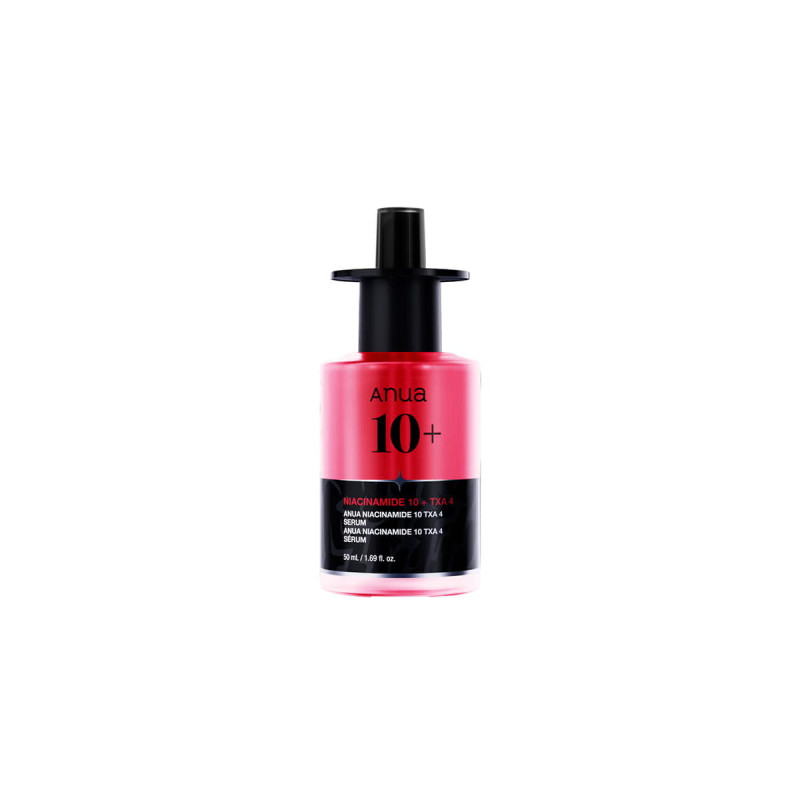
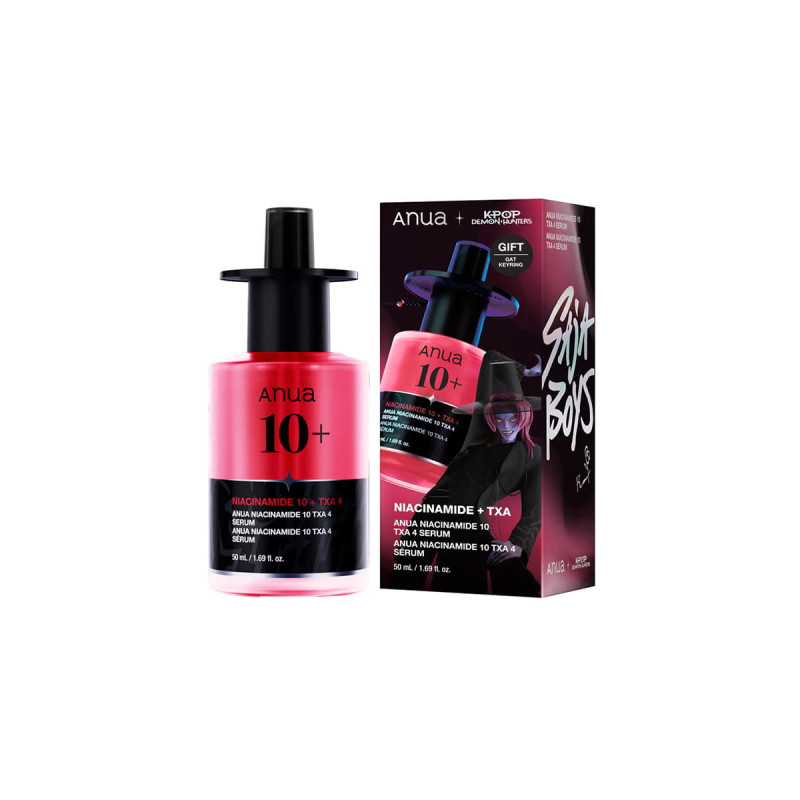
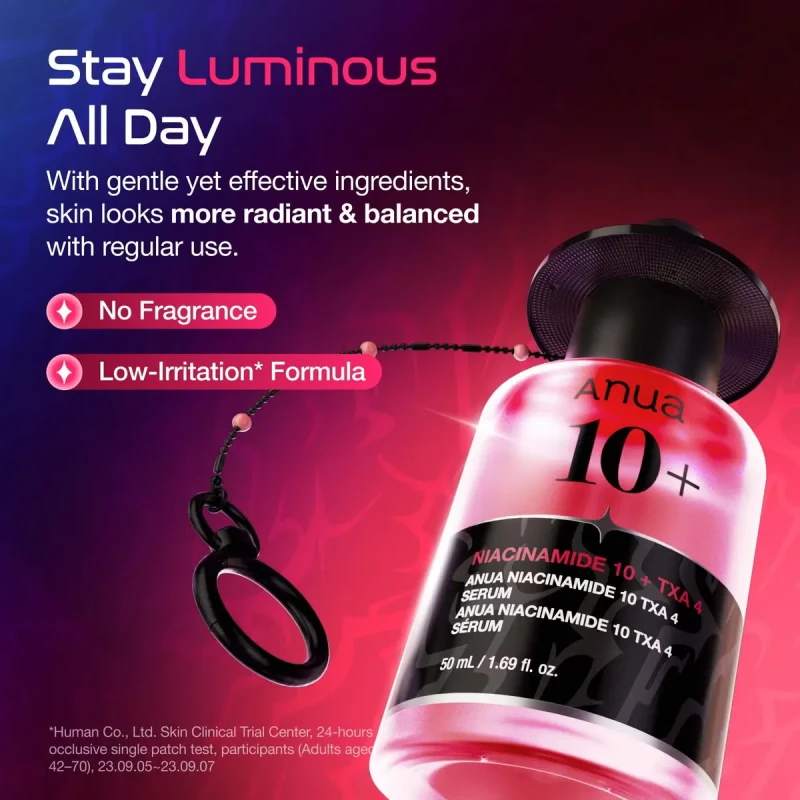

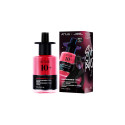
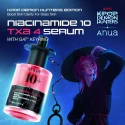
Anua Niacinamide 10% TXA 4% Serum 50ml (KPOP Demon Hunters Edition)
৳2,650
Anua Niacinamide 10% TXA 4% Serum (KPOP Demon Hunters Edition) এ ১০% Niacinamide, ৪% Tranexamic Acid ও ২% Arbutin ত্বকের কালো দাগ, ব্রণের দাগ ও অসম স্কিন টোনের যত্নে সহায়তা করে। Hyaluronic Acid ত্বক হাইড্রেটেড রাখতে সাহায্য করে।
- Brand: Anua
- Product Code:
- SKU: 8800307378893
- Availability: In Stock
Description
Anua Niacinamide 10 TXA 4 Serum 50ml (KPOP Demon Hunters Edition) is a Korean brightening serum targeting the appearance of dark spots, post-blemish marks, dullness and uneven tone.
Unusually, the numbers in its name are backed by the ingredient order: Niacinamide sits third and Tranexamic Acid fourth, immediately after water and glycerin — exactly where a genuine 10% and 4% would place them.
Around those two sit Glycerin, ten forms of hyaluronic acid, Polyglutamic Acid, Panthenol, a Centella Asiatica complex, a vitamin C derivative, Ceramide NP, and two herbs long familiar in South Asia. The formula contains no added fragrance.
Table of Contents
Why Choose This Serum?
The Numbers Check Out — Here’s How We Know
10% Niacinamide
4% Tranexamic Acid
Key Benefits
Dark Spots and Post-Acne Marks
About the Ten Hyaluronic Acids
Telakucha, Bhringraj and the Botanicals
The Ingredient Not in the Name
A Note on Arbutin
Hydration and Skin Comfort
The KPOP Demon Hunters Edition
Key Ingredients and Their Benefits
Texture and Finish
Suitable Skin Types
How to Use
Recommended Skincare Routine
Using It With Other Actives
Full Ingredients List
Product Details
Precautions
Buy This Serum in Bangladesh
Official Source
Frequently Asked Questions
Why Choose Anua Niacinamide 10 TXA 4 Serum?
Dark spots and post-blemish marks fade slowly, and most people give up before they see a change — usually because they chose a product whose headline number turned out to mean very little.
Anua Niacinamide 10 TXA 4 Serum is a rare case where the number on the bottle lines up with the ingredient list. Niacinamide is the third ingredient and Tranexamic Acid the fourth, and the section below explains exactly why that matters.
Both ingredients act on pigmentation, by different routes — niacinamide on how pigment moves between skin cells, tranexamic acid further upstream. Using them together is a well-established pairing.
The supporting cast handles comfort: Glycerin at second, Polyglutamic Acid, Panthenol, a four-part Centella Asiatica complex, Ceramide NP and a long list of hyaluronic acid forms.
It is a cosmetic serum for the appearance of pigmentation. It is not a treatment for melasma or any medical condition, and results depend entirely on daily sunscreen.
The Numbers Check Out — Here’s How We Know
Most brightening serums put a number on the bottle and leave you no way to verify it. Here, the ingredient order does the job.
What the List Shows
Position Ingredient
1st Water
2nd Glycerin
3rd Niacinamide
4th Tranexamic Acid
5th Butylene Glycol
Why This Is Reassuring
Ingredients are listed in descending order of quantity. For a serum claiming 10% niacinamide and 4% tranexamic acid, third and fourth positions are exactly where they should land — below water and glycerin, above everything else.
Had the claim been inflated, you would expect to find them further down the list. They are not.
Compare With the Range’s Other Serum
Anua’s Azelaic Acid 10 Hyaluron serum — same bottle shape, same collaboration — tells a different story. There, the main azelaic ingredient is disodium azelate, a water-soluble salt, with free azelaic acid only at seventh position. Its “10” refers to a complex rather than to 10% free azelaic acid.
Here, the numbers mean what they appear to mean. We think that difference is worth knowing before you choose between them.
One Honest Caveat
Ingredient order confirms the figures are plausible and consistent; it is not a laboratory assay. But it is far more than most products let you check, and nothing in this list contradicts the claim.
10% Niacinamide
What It Does for Pigmentation
Niacinamide works by interrupting the transfer of melanin-containing packets from pigment-producing cells to the surrounding skin cells. The pigment is still made; less of it reaches the surface. Over time, that softens the look of dark spots.
It also supports barrier function and may moderate excess oil — which is why it suits oily, blemish-prone skin as well as pigmented skin.
About the 10%
For context, Korea registers niacinamide as an approved brightening active at 2% to 5%. At 10%, this serum sits at double the top of that approved range, which is why it carries no Korean functional-cosmetic designation.
Is 10% Better Than 5%?
Not necessarily, and this is worth being straight about. Much of the published research on niacinamide and pigmentation used concentrations in the 2% to 5% range. Higher levels carry a greater chance of flushing, tingling or dryness.
A 5% serum you use comfortably every day for six months will do more than a 10% one that stings and gets abandoned.
Who the 10% Suits
Skin that already tolerates niacinamide well and wants the stronger option. If you are new to niacinamide, or your skin flushes easily, start with a lower concentration — or introduce this one slowly.
4% Tranexamic Acid
What It Does
Tranexamic acid acts further upstream than niacinamide — on the signalling that tells pigment cells to switch on in the first place, including signals triggered by UV exposure and inflammation.
That is why the two are paired. One reduces the signal to make pigment; the other reduces how much reaches the surface.
The Evidence
Topical tranexamic acid has been studied specifically for melasma and post-inflammatory hyperpigmentation, the two hardest kinds of discolouration to shift, and it is one of the better-evidenced newer brightening ingredients.
An Honest Regulatory Note
Tranexamic acid is not on Korea’s list of approved brightening functional actives, unlike niacinamide. That does not mean it does not work — the clinical literature is genuinely encouraging. It means Korea has not registered it as a functional-cosmetic active, so no Korean product can make a regulated brightening claim on the strength of it.
Is It an Exfoliating Acid?
No. Despite the name, it is nothing like glycolic or salicylic acid. It does not exfoliate, and it will not make your skin peel.
On Melasma
Melasma is a medical condition, often hormonal, notoriously stubborn and prone to returning. A cosmetic serum may support a treatment plan but will not resolve it. If you suspect melasma, see a dermatologist.
9 Key Benefits of Anua Niacinamide 10 TXA 4 Serum
Verifiable Concentrations: Niacinamide third and tranexamic acid fourth — consistent with the stated 10% and 4%.
Two Pigment Pathways: Niacinamide and tranexamic acid act on discolouration by different mechanisms.
Post-Acne Mark Care: Aimed squarely at the flat dark marks blemishes leave behind.
A Third Brightening Ingredient: 3-O-Ethyl Ascorbic Acid, a stable vitamin C derivative.
Glycerin at Second: A strong hydration base beneath the actives.
Centella Complex: Madecassoside, asiaticoside, asiatic acid, madecassic acid and the extract itself.
Barrier Support: Ceramide NP, Panthenol and Hydrogenated Lecithin.
No Added Fragrance: No fragrance or parfum anywhere in the formula.
Light Texture: A watery serum that layers easily and suits humid weather.
Dark Spots and Post-Acne Marks
What Responds Best
Flat brown or red marks left after blemishes clear. This is the concern the formula is built for, and the one most likely to improve.
Sun-Related Spots
These respond too, but more slowly — and only alongside daily sunscreen.
How Long
Two to three months at minimum for visible change in pigmentation. Nothing happens in the first fortnight except, for some people, mild tingling.
Sunscreen Is Not Optional
Brightening ingredients work on existing pigment while sunlight keeps making more. Without daily SPF 30 or higher, you are running in place — and this is the single most common reason people conclude a brightening serum “did not work”.
What It Cannot Do
Indented or raised acne scars will not change — those are structural and need professional treatment. And no cosmetic changes your natural skin colour; brightening means evening out discolouration, not lightening skin.
About the Ten Hyaluronic Acids
The formula lists ten different forms of hyaluronic acid. It is an impressive-looking line on a label, so here is where they actually sit.
Form Position in a 50-ingredient list
Sodium Hyaluronate 9th
Hydrolyzed Hyaluronic Acid 32nd
Eight further forms 43rd to 50th — the final eight slots
What That Means
One of the ten — sodium hyaluronate at ninth — is present at a level that does real work. The other nine sit in the bottom third, and eight of them occupy the very last positions in the list.
Is That a Problem?
Not for the product’s performance, because the hydration is coming from somewhere better: Glycerin at second position. Glycerin is the most reliable humectant in skincare, and at second it is doing the heavy lifting.
It is a problem only if you choose this serum because of the ten hyaluronic acids. Choose it for the niacinamide and tranexamic acid — those are the ingredients whose placement supports the claim.
Do Different Molecular Sizes Help?
There is a reasonable idea behind multi-weight hyaluronic acid — different sizes sit at different depths in the upper skin. But the idea only matters if meaningful amounts of each are present, and at positions 43 to 50 that is not what is happening here.
Telakucha, Bhringraj and the Botanicals
Two of this formula’s higher-placed botanicals will be far more familiar in Bangladesh than their Latin names suggest.
Coccinia Indica — Telakucha — 13th
The ivy gourd, known here as telakucha, a plant long used across South Asia. At thirteenth position it sits higher than most botanicals in a serum of this length.
Eclipta Prostrata — Bhringraj — 14th
Bhringraj, also called keshraj, needs no introduction in this part of the world — it has been used on skin and hair here for generations.
Why We Are Naming Them
Because an ingredient list that says “Eclipta Prostrata Extract” tells you nothing, while “bhringraj” tells you a great deal. Their presence at 13th and 14th in a Korean serum is unusual and worth knowing about.
As with any botanical at these positions, treat them as part of the formula’s character rather than as the active ingredients. The niacinamide and tranexamic acid remain what does the work.
The Rest of the Botanical Side
Artemisia Princeps (41st) is Korean mugwort, a staple of soothing Korean skincare. The Centella Asiatica complex appears as the extract plus madecassoside, asiaticoside, asiatic acid and madecassic acid listed individually — a more thorough approach than extract alone. Cocoa extract, hinoki cypress leaf, peach flower and green tea seed oil round it out.
The Ingredient Not in the Name
The bottle names niacinamide and tranexamic acid. There is a third active worth knowing about.
Betaine Salicylate — 11th
Betaine salicylate sits eleventh — the salicylic-acid-related ingredient widely used in Korean skincare as a BHA. At that position it makes a real contribution, working inside the pores on texture and congestion.
Why It Matters
For blemish-prone skin, this is a bonus — it addresses the breakouts while the brightening actives work on the marks they leave.
For sensitive skin, it is a reason to go slowly. 10% niacinamide plus a BHA in one bottle is more than the gentle pink colour suggests.
Important If You Also Use the Azelaic Serum
Anua’s Azelaic Acid 10 Hyaluron serum also contains betaine salicylate. Using both serums together means two doses of the same salicylate in one routine. If you own both, alternate them rather than layering.
3-O-Ethyl Ascorbic Acid — 28th
A stable vitamin C derivative, and one of the nine ingredients Korea approves for brightening (at 1% to 2%). At 28th position it most likely sits below that range here, so read it as a supporting antioxidant rather than a third headline active.
A Note on Arbutin
You will find descriptions of Anua’s niacinamide serum that mention arbutin or alpha-arbutin.
Neither appears in the ingredient declaration for this special edition. We have checked the full list, and no form of arbutin is present.
We are therefore not claiming arbutin as an ingredient of this product, and if arbutin is specifically what you are shopping for, this is not the serum for it.
Ingredient declarations can differ between regional and packaging versions, so always read the label on the bottle you actually receive.
Hydration and Skin Comfort
The Hydration Base
Glycerin at second position is the formula’s real humectant, supported by Butylene Glycol, Pentylene Glycol, Sodium Hyaluronate (9th) and Polyglutamic Acid (27th).
Comfort Ingredients
Panthenol (25th), the Centella complex and Artemisia Princeps support skin comfort — sensible inclusions in a formula carrying 10% niacinamide plus a BHA.
Barrier Ingredients
Ceramide NP (29th) and Hydrogenated Lecithin (15th). The ceramide sits mid-list at a cosmetic level, so read it as a helpful addition rather than a barrier-repair dose.
The Plant Oils
Macadamia, olive, jojoba, grape seed and green tea seed oils, between 17th and 35th, soften the finish without making a light serum heavy.
Does It Replace Moisturizer?
No — and with 10% niacinamide and a BHA in the bottle, following with a moisturizer is not optional.
The KPOP Demon Hunters Edition
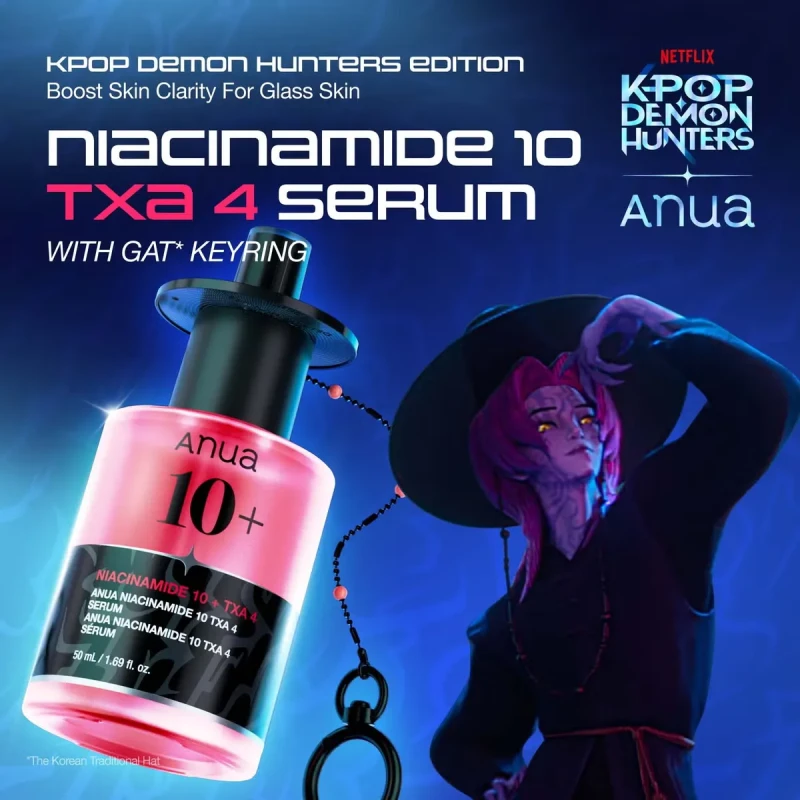
A special collaboration release tied to the animated film, in pink-and-black packaging with character artwork.
The Gift
The packaging advertises a Gat Keyring. Confirm with the seller that it is included in the package you are buying, as gift availability varies by batch and retailer.
Is the Formula the Same?
It carries the same niacinamide and tranexamic acid concept as the standard line, but ingredient declarations can differ between editions — the arbutin question above is exactly why. Check the label on the bottle you receive.
About the Size
This edition is 50ml. The standard serum is also sold in 10ml and 30ml, which are separate products rather than size variants of this collaboration edition.
Key Ingredients and Their Benefits
Niacinamide — 3rd
Vitamin B3 at a stated 10%, and the formula’s lead active. Interrupts pigment transfer between skin cells and supports barrier function.
Tranexamic Acid — 4th
At a stated 4%, acting further upstream on the signalling that triggers pigment production. Well studied for melasma and post-inflammatory marks.
Glycerin — 2nd
The formula’s genuine hydration workhorse, placed above both actives.
Betaine Salicylate — 11th
A BHA-type ingredient not named on the bottle. See its own section above.
Coccinia Indica (Telakucha) — 13th and Eclipta Prostrata (Bhringraj) — 14th
Two South Asian botanicals at unusually high positions for a Korean serum.
Panthenol — 25th
Provitamin B5, supporting comfort alongside the actives.
Cyanocobalamin — 26th
Vitamin B12, which is naturally deep pink-red and gives this serum its colour. The formula contains no synthetic colourants. It does not provide any nutritional benefit through the skin.
Polyglutamic Acid — 27th
A water-binding ingredient that holds moisture at the surface.
3-O-Ethyl Ascorbic Acid — 28th
A stable vitamin C derivative and one of Korea’s nine approved brightening actives, here in a supporting position.
Ceramide NP — 29th
A skin-identical barrier lipid at a cosmetic level.
The Centella Complex
Madecassoside (21st), asiaticoside, madecassic acid, asiatic acid and Centella Asiatica Extract (40th) — the compounds listed individually rather than as extract alone.
The Hyaluronic Acid Forms
Ten in total. See their dedicated section above for where they sit.
Texture and Finish
Watery Serum
Light and fluid, built on water and glycerin rather than oils, and easy to layer under other products.
The Pink Colour
From the cyanocobalamin at 26th — vitamin B12 is naturally deep pink-red. There are no synthetic colourants in the formula.
Finish
Absorbs without stickiness and sits well under sunscreen and makeup once settled.
A Word on Tingling
Mild tingling on the first few applications is common with 10% niacinamide and usually settles. Burning, flushing or persistent stinging means too much, too soon.
Which Skin Types Can Use This Serum?
Post-Acne Marks: The clearest fit — two actives aimed exactly at this.
Dark Spots and Uneven Tone: What the formula is built for.
Dull Skin: Brightening actives plus a strong hydration base.
Oily Skin: Light texture; niacinamide may help with shine; betaine salicylate works in the pores.
Combination Skin: Comfortable across the face.
Blemish-Prone Skin: The BHA addresses breakouts while the actives work on the marks.
Normal Skin: Usable for tone maintenance.
Dehydrated Skin: Hydrating, but follow with moisturizer.
Dry Skin: Usable with a proper moisturizer over it.
Niacinamide Beginners: Start slowly — 10% is double Korea’s approved range and can flush sensitive skin.
Sensitive Skin: Approach with caution. Patch-test, start twice a week.
Suspected Melasma: See a dermatologist rather than working through serums.
How to Use Anua Niacinamide 10 TXA 4 Serum
Patch-test on the inner forearm for a few days first.
Cleanse with a gentle cleanser.
Apply toner if it is part of your routine.
Dispense a few drops onto clean fingertips.
Apply a thin layer across the face, or on the areas with marks.
Avoid the eyelids, lips and any irritated skin.
Pat gently until absorbed.
Always follow with a moisturizer.
If you are new to niacinamide, start two or three times a week and build up.
Apply broad-spectrum SPF 30 or higher every morning — non-negotiable with any brightening routine.
More drops will not work faster. With 10% niacinamide and a BHA in one bottle, they mainly increase the chance of flushing.
Recommended Skincare Routine
Morning Routine
Step 1 – Cleanse gently. Step 2 – Toner if you use one. Step 3 – This serum. Step 4 – Moisturizer. Step 5 – Sunscreen, SPF 30 or higher.
Evening Routine
Step 1 – Remove makeup and sunscreen thoroughly. Step 2 – Cleanse. Step 3 – Toner. Step 4 – This serum. Step 5 – Moisturizer.
Building Up
Weeks 1 to 2: two or three times a week. After that, increase if your skin stays comfortable. Once daily is plenty for most people; twice daily is permitted but rarely necessary.
Which Time of Day?
Either. Morning pairs well with sunscreen for pigmentation, since you are protecting while you treat.
Using It With Other Actives
With Anua’s Azelaic Acid Serum
Alternate rather than layer. Both contain betaine salicylate, so using them together doubles the salicylate load. One in the morning and one at night, or on alternate days, is the sensible approach.
With Vitamin C
Compatible. The old advice that niacinamide and vitamin C cannot be combined has not held up — the two are used together routinely. This serum already contains a vitamin C derivative.
With Retinol
Niacinamide pairs well with retinoids and can help offset their dryness. Introduce one at a time, and if your skin is sensitive, use them on alternate nights.
With AHA or BHA
Be careful — this serum already contains a BHA. Adding another exfoliating acid is the quickest route to dryness and flushing. Alternate days at most.
With Hyaluronic Acid or Ceramide Moisturizers
Both pair well. A ceramide moisturizer over the top is exactly what makes an active serum comfortable.
With Sunscreen
Serum, then moisturizer, then sunscreen. This product has no SPF.
Full Ingredients List
Aqua (Water), Glycerin, Niacinamide, Tranexamic Acid, Butylene Glycol, Diethoxyethyl Succinate, 1,2-Hexanediol, Pentylene Glycol, Sodium Hyaluronate, Xanthan Gum, Betaine Salicylate, Sucrose Palmitate, Coccinia Indica Fruit Extract, Eclipta Prostrata Extract, Hydrogenated Lecithin, Gellan Gum, Macadamia Integrifolia Seed Oil, Olea Europaea (Olive) Fruit Oil, Simmondsia Chinensis (Jojoba) Seed Oil, Vitis Vinifera (Grape) Seed Oil, Madecassoside, Sodium Phytate, Cellulose, Caprylic/Capric Triglyceride, Panthenol, Cyanocobalamin, Polyglutamic Acid, 3-O-Ethyl Ascorbic Acid, Ceramide NP, Dextrin, Theobroma Cacao (Cocoa) Extract, Hydrolyzed Hyaluronic Acid, Chamaecyparis Obtusa Leaf Extract, Prunus Persica (Peach) Flower Extract, Camellia Sinensis Seed Oil, Asiaticoside, Madecassic Acid, Asiatic Acid, Yeast Ferment Extract, Centella Asiatica Extract, Artemisia Princeps Leaf Extract, Candida Bombicola/Glucose/Methyl Rapeseedate Ferment, Dimethylsilanol Hyaluronate, Hydrolyzed Sodium Hyaluronate, Hyaluronic Acid, Potassium Hyaluronate, Hydroxypropyltrimonium Hyaluronate, Sodium Hyaluronate Crosspolymer, Sodium Hyaluronate Dimethylsilanol, Sodium Acetylated Hyaluronate.
Fifty ingredients in total.
Lead Actives: Niacinamide (3rd) and Tranexamic Acid (4th) — positions consistent with the stated 10% and 4%.
Third Active: Betaine Salicylate (11th), a BHA-type ingredient not named on the bottle.
Hydration: Glycerin (2nd), Butylene Glycol, Pentylene Glycol, Sodium Hyaluronate (9th) and Polyglutamic Acid (27th).
Additional Brightening Ingredient: 3-O-Ethyl Ascorbic Acid (28th), one of Korea’s nine approved brightening actives, here in a supporting position.
South Asian Botanicals: Coccinia Indica, known here as telakucha (13th), and Eclipta Prostrata, bhringraj (14th).
Centella Complex: Madecassoside (21st), asiaticoside, madecassic acid, asiatic acid and Centella Asiatica Extract (40th).
Comfort and Barrier: Panthenol (25th), Hydrogenated Lecithin (15th), Ceramide NP (29th) and Artemisia Princeps (41st).
Plant Oils: Macadamia, olive, jojoba, grape seed and green tea seed oils.
Hyaluronic Acid: Ten forms in total. Sodium Hyaluronate at 9th is the meaningful one; eight further forms occupy positions 43 to 50 — the final eight slots of the list.
Colour: From Cyanocobalamin (26th), vitamin B12, which is naturally pink-red. No synthetic colourants are used.
Arbutin: Not present. No arbutin or alpha-arbutin appears in this declaration, despite mentions in some descriptions of the range.
Fragrance: None. No fragrance or parfum in the formula.
Not Present: No retinol, and no SPF.
Note: Manufacturers may update formulations between batches, and special editions can differ from standard ones. The declaration printed on your own bottle is always the definitive reference.
Product Details
Brand Anua
Product Name Anua Niacinamide 10 TXA 4 Serum
Edition KPOP Demon Hunters Special Edition
Product Category Skin Care / Serum / Brightening Serum
Product Type Concentrated Brightening Serum
Main Function Dark Spot Appearance, Post-Blemish Marks, Uneven Tone and Hydration
Lead Active Niacinamide — 3rd in the Ingredient List, Stated at 10%
Second Active Tranexamic Acid — 4th in the Ingredient List, Stated at 4%
Concentration Check Ingredient Order Is Consistent With Both Stated Figures
Third Active Betaine Salicylate — 11th, a BHA-Type Ingredient
Additional Brightening Ingredient 3-O-Ethyl Ascorbic Acid — 28th
Arbutin Not Present in This Formula
Hydration Base Glycerin — 2nd, Above Both Actives
Hyaluronic Acid Forms Ten — One at 9th, Eight in the Final Eight Positions
South Asian Botanicals Coccinia Indica, Telakucha (13th) and Eclipta Prostrata, Bhringraj (14th)
Centella Complex Extract Plus Madecassoside, Asiaticoside, Asiatic Acid and Madecassic Acid
Barrier Ingredients Ceramide NP, Panthenol and Hydrogenated Lecithin
Total Ingredients 50
Colour Source Cyanocobalamin (Vitamin B12) — No Synthetic Colourants
Added Fragrance None
Contains Retinol No
Texture Lightweight Watery Serum
Appearance Pink
Main Skin Concerns Dark Spots, Post-Acne Marks, Dullness and Uneven Tone
Best For Oily, Combination and Blemish-Prone Skin With Pigmentation
Niacinamide Beginners Start Slowly — 10% Is Double Korea’s Approved Range of 2–5%
Pregnancy and Breastfeeding Consult a Healthcare Professional — Formula Contains Betaine Salicylate
Beginner Frequency 2–3 Times Weekly, Building Up Gradually
Application Area Face, Avoiding Eyes and Lips
Product Step After Toner, Before Moisturizer
Sun Protection None — Broad-Spectrum SPF 30 or Higher Essential Every Morning
Packaging Special Edition Bottle with Collaboration Box
Collectible Gift Gat Keyring Advertised — Confirm Contents With the Seller
Available Size 50ml
Other Sizes in the Standard Line 10ml and 30ml — Separate Products, Not Variants of This Edition
Product SKU 8800307378893
Country of Origin South Korea
Important Usage Tips and Precautions
For external cosmetic use only.
Patch-test on the inner forearm for a few days before first facial use.
Start two or three times a week if you are new to concentrated niacinamide, and build up slowly.
10% niacinamide is double Korea’s approved brightening range of 2–5% and may cause flushing or tingling in sensitive skin.
Mild tingling at first is common; burning or persistent flushing means stop.
Avoid the eyelids, lips and mucous membranes.
Do not apply to broken, sunburned or severely irritated skin.
This serum contains a BHA as well as two brightening actives. Be cautious about adding further acids.
If you also use Anua’s azelaic serum, alternate them — both contain betaine salicylate.
Always follow with a moisturizer.
Use broad-spectrum SPF 30 or higher every morning. Without it, a brightening routine cannot work.
If pregnant or breastfeeding, consult a healthcare professional — the formula contains betaine salicylate, a salicylate.
Do not use more drops to get faster results.
Do not expect immediate or permanent removal of pigmentation.
Persistent or symmetrical facial pigmentation may be melasma and should be assessed by a dermatologist.
It will not remove indented or raised acne scars, or change natural skin colour.
Store away from direct sunlight and excessive heat, and keep the bottle closed.
Keep out of reach of children.
Buy Anua Niacinamide 10 TXA 4 Serum in Bangladesh
Buy the Anua Niacinamide 10 TXA 4 Serum KPOP Demon Hunters Edition 50ml in Bangladesh from KC BAZAR. A Korean brightening serum whose stated 10% niacinamide and 4% tranexamic acid are backed by their third and fourth positions in the ingredient list — with nationwide home delivery.
Browse more Korean Serums at KC BAZAR.
Official Source
The bottle and box are marked ANUA — 10+ — NIACINAMIDE 10 + TXA 4 — ANUA NIACINAMIDE 10 TXA 4 SERUM — 50 mL / 1.69 fl. oz.
The box carries the ANUA + KPOP DEMON HUNTERS collaboration branding and advertises a Gat Keyring gift.
The ingredient declaration lists Niacinamide as the third ingredient and Tranexamic Acid as the fourth, immediately after water and glycerin — an order consistent with the stated 10% and 4%. No arbutin appears in this declaration.
Anua advises applying a few drops before moisturizer, in morning or evening routines, and discontinuing use if irritation persists.
Anua — Official Product Page
Frequently Asked Questions
1. Does this serum really contain 10% niacinamide and 4% tranexamic acid?
The ingredient order supports both figures. Niacinamide is third and tranexamic acid fourth, immediately after water and glycerin — exactly where a genuine 10% and 4% would sit. That is not a laboratory assay, but it is far more verification than most serums allow, and nothing in the list contradicts the claim.
2. How is this different from Anua’s azelaic acid serum?
Beyond the different actives, the numbers behave differently. In the azelaic serum, the main azelaic ingredient is a water-soluble salt and free azelaic acid sits seventh, so its “10” refers to a complex. Here, the ingredient order backs the figures directly.
3. Can I use both Anua serums together?
Alternate them rather than layering. Both contain betaine salicylate, so using them in the same routine doubles the salicylate load. Morning and night, or alternate days, works well.
4. Is 10% niacinamide too strong?
It is double Korea’s approved brightening range of 2% to 5%, and much of the research on pigmentation used the lower range. If your skin already tolerates niacinamide, 10% is fine. If you are new to it or flush easily, start twice a week or choose a lower concentration.
5. What does tranexamic acid do that niacinamide does not?
It acts further upstream — on the signalling that tells pigment cells to switch on, including signals from UV and inflammation. Niacinamide reduces how much pigment reaches the surface. Two different points in the same process, which is why they are paired.
6. Does it contain arbutin?
No. Despite arbutin appearing in some descriptions of this range, no arbutin or alpha-arbutin is in this edition’s ingredient declaration. If arbutin is what you want, this is not the serum for it.
7. Why is the serum pink?
From cyanocobalamin — vitamin B12, which is naturally deep pink-red. The formula contains no synthetic colourants. The vitamin B12 provides no nutritional benefit through the skin.
8. How long until I see results?
Two to three months at minimum for pigmentation, and only with daily sunscreen. Nothing visible happens in the first fortnight.
9. Will it help with melasma?
Tranexamic acid has been studied specifically for melasma, so the formula is relevant. But melasma is a medical condition, often hormonal and prone to returning — see a dermatologist rather than working through serums.
10. Can sensitive skin use it?
With caution. 10% niacinamide plus a BHA is more than the gentle pink colour suggests. Patch-test, start twice a week, always moisturize after, and stop if it burns rather than tingles.
11. Can I use it with vitamin C?
Yes. The old advice against combining niacinamide and vitamin C has not held up — they are used together routinely. This serum already contains a vitamin C derivative.
12. What size and SKU is the KPOP Demon Hunters Edition?
The collaboration edition is 50ml, Product SKU 8800307378893, and advertises a Gat Keyring gift — confirm the contents with the seller. The standard 10ml and 30ml bottles are separate products, not size variants of this edition.
Related Products
Food & Supplement




Celimax The Vita A Retinol Shot Tightening Serum 30 ml
৳1,485 ৳1,650 Ex Tax: ৳1,485


