


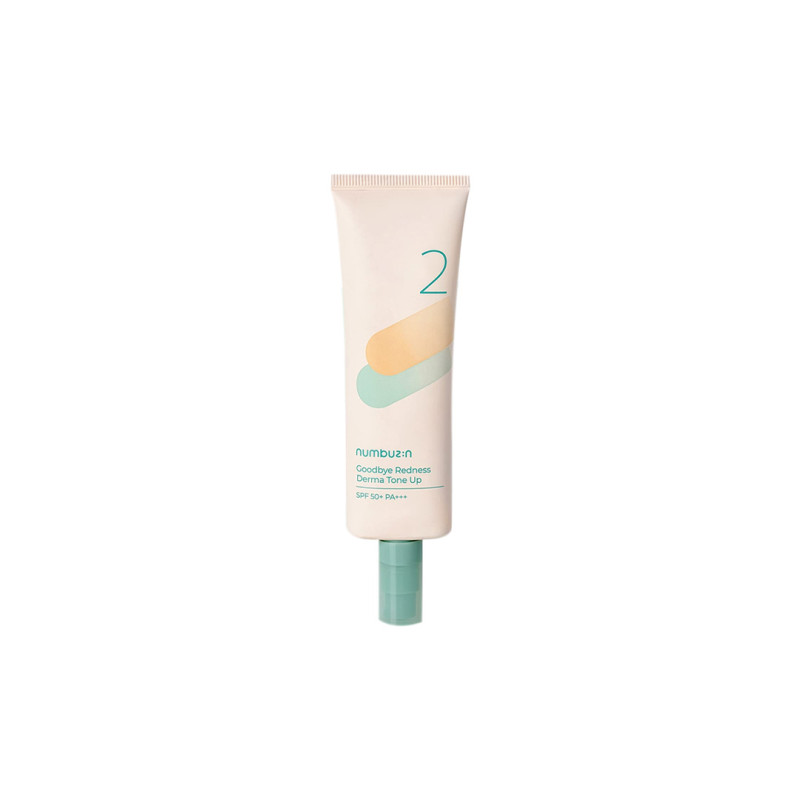
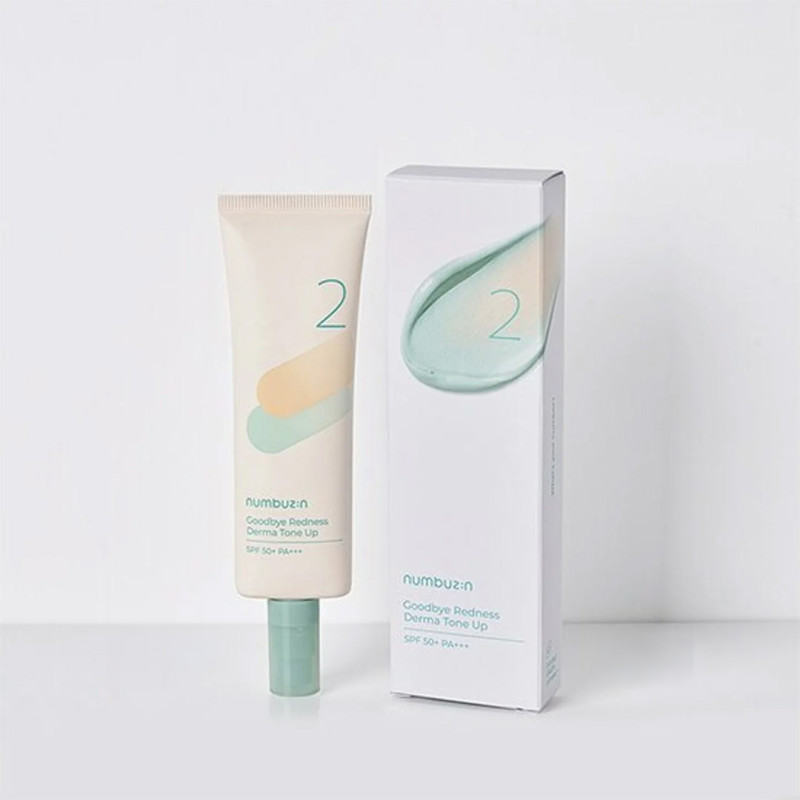
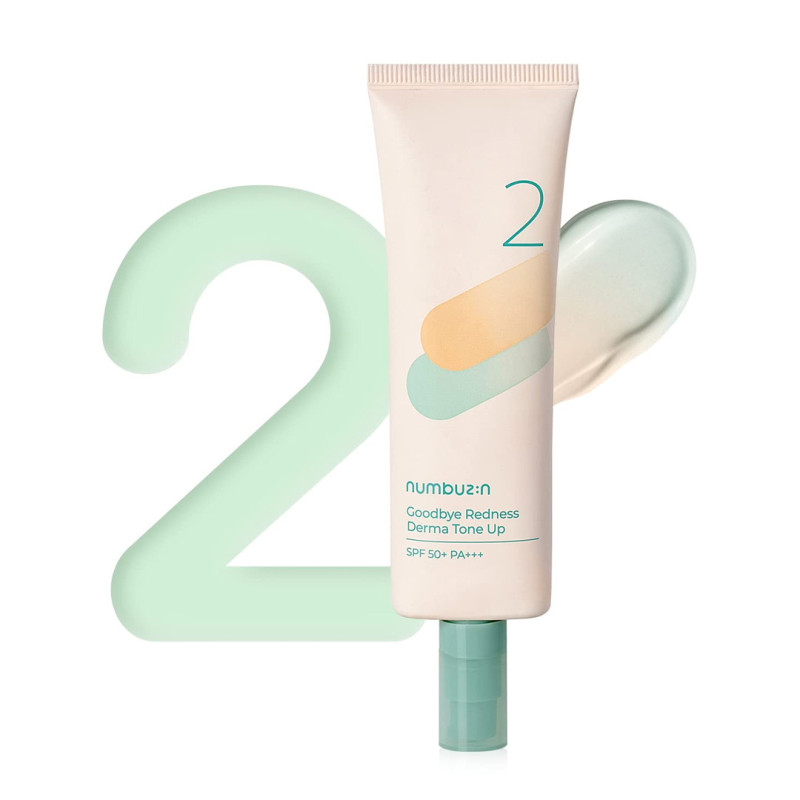
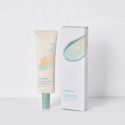
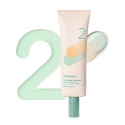
numbuzin No.2 Goodbye Redness Derma Tone Up SPF 50+ PA+++ 50 ml
৳2,100
Numbuzin No.2 Goodbye Redness Derma Tone Up SPF50+ PA+++ ত্বকের রেডনেস ও দাগের দৃশ্যমানতা কমিয়ে ইভেন স্কিন টোন দেয়। Green-to-Beige Color Correcting Formula, Centella Asiatica ও Tea Tree Extract ত্বককে ন্যাচারাল টোন-আপ লুক ও UV Protection দিতে সাহায্য করে।
- Brand: Food A Holic
- Product Code:
- SKU: 8809652580685
- Availability: In Stock
Description
Numbuzin No.2 Goodbye Redness Derma Tone Up SPF50+ PA+++ is a green colour-correcting primer with sun filters in it — and as a primer it is genuinely well made: fragrance-free, with the complete set of four centella compounds and a green pigment light enough to look natural.
As a sunscreen, it needs honesty. Only one of its four filters gives real UVA protection, one of the others is among the least photostable filters in use, and nobody applies a tinted primer at the dose SPF is tested at.
And with titanium dioxide at the third position, the white cast question matters a great deal on Bangladeshi skin tones.
Table of Contents
- Why Choose This Tone-Up Cream?
- Four Filters, One Real UVA Protector
- Why You Are Probably Not Getting SPF 50
- Titanium Dioxide, Ten Silicones, and Brown Skin
- Key Benefits
- Key Ingredients and Their Positions
- Suitable Skin Types
- How to Use
- Recommended Skincare Routine
- Precautions
- Product Details
- Buy This Tone-Up Cream in Bangladesh
- Official Source
- Frequently Asked Questions
Why Choose numbuzin No.2 Goodbye Redness Derma Tone Up?
The Green Correction Is Done With Restraint
Chromium Oxide Greens sits at the fifty-eighth position of sixty-one.
That is a genuine credit. Heavy green correctors look obviously green, and a trace level is exactly how you get subtle neutralisation instead of a tinted mask. The colour reads as a soft correction, not a costume.
The Complete Centella Set
Two centella extracts plus all four standardised compounds — asiaticoside, asiatic acid, madecassic acid and madecassoside.
Madecassoside is the most-studied of the four and the one most often left out. Many cica products carry only three. This one has the full set.
Completely Fragrance-Free
No Parfum, no essential oils, no declared fragrance allergens anywhere in sixty-one ingredients. For a product aimed at redness-prone skin, that matters more than any botanical in it.
Note also that the tea tree here is leaf extract, not leaf oil — considerably less allergenic than the oil, and a deliberate choice.
A Genuinely Good Primer
Ten silicones and a film-forming system give real blurring and a smooth base for makeup. If you want one step that evens tone and preps the face, this does it well.
Coated Mineral Filters
Aluminum hydroxide and triethoxycaprylylsilane in the list are the particle coatings on the titanium dioxide and zinc oxide — standard practice that keeps the minerals from being photochemically active on your skin. A quiet mark of competent formulation.
What We Will Be Straight With You About
Three things, and they all point the same way.
Only the zinc oxide gives real UVA1 protection, and the octinoxate at the fourth position is among the least photostable filters in use.
Nobody applies a green-tinted primer at the dose SPF is tested at — which means most people are not getting anything close to SPF 50 from it.
And titanium dioxide at the third position is a lot of white pigment on skin tones like ours.
Buy it as a primer. Wear a real sunscreen underneath.
Four Filters, One Real UVA Protector
What Is In It
| Titanium Dioxide | 3rd | UVB + partial UVA2 |
| Ethylhexyl Methoxycinnamate | 4th | UVB only — photo-unstable |
| Zinc Oxide | 6th | The only true UVA1 filter |
| Ethylhexyl Salicylate | 7th | UVB only — weak |
Why UVA Matters More Here Than UVB
UVB causes burning. UVA causes ageing, pigmentation and — relevantly for this product — it drives and worsens facial redness.
UVA also penetrates glass, so you get it through car and office windows, and its intensity stays high all day rather than peaking at noon.
For a product sold to people with redness, UVA protection is the more important half of the job.
The Analysis
Of the four filters, only zinc oxide covers the full UVA1 range.
Titanium dioxide handles UVB well and reaches partway into UVA2, but drops off in UVA1. Octinoxate and octisalate are UVB filters and contribute nothing to UVA.
So the UVA burden rests almost entirely on zinc oxide at the sixth position.
And the PA Rating Reflects That Honestly
This is rated PA+++, not PA++++ — and that is a point in its favour.
PA+++ is a real, lab-measured rating, and it is one grade below the maximum. numbuzin did not overclaim. A formula with this filter set reaching PA+++ is behaving exactly as the chemistry predicts.
The Octinoxate Problem
Ethylhexyl methoxycinnamate — octinoxate — is at the fourth position, and it is one of the least photostable UV filters in common use.
It degrades under the very light it is meant to block, losing a meaningful share of its effectiveness within a couple of hours of sun exposure. It performs best when paired with a dedicated photostabiliser.
There is no such photostabiliser in this formula. The mineral filters are photostable in themselves, but they do not protect the octinoxate the way certain modern organic filters do.
What that means practically: the protection this product offers at hour three is less than at hour one. Reapplication is not optional advice here — it is how the formula is designed to be used.
The Honest Verdict on the Filters
This is a competent primer-sunscreen filter set, not a high-performance one.
For a day mostly indoors, it is adequate. For sustained time outdoors in Bangladesh’s sun, use a dedicated broad-spectrum sunscreen underneath and treat this as the colour step on top. Ask us and we will point you to one.
Why You Are Probably Not Getting SPF 50
This is the most important section on the page, and it applies to every tinted SPF product ever made.
How SPF Is Measured
SPF is tested in a laboratory at an application density of 2 milligrams per square centimetre of skin.
For an average adult face, that works out to roughly 1.2 to 1.5 grams — about a third of a teaspoon, or what the “two-finger rule” delivers: two full strips of product along your index and middle fingers.
That is a great deal of product.
Now Picture Applying That Much Green Tinted Cream
You would not.
A third of a teaspoon of a pigmented colour corrector would sit heavy, look obvious, and defeat the entire purpose. People use a tone-up primer the way they use any primer: a thin, blendable layer, roughly a quarter to a half of the tested dose.
And Protection Does Not Scale Evenly
Here is the part that surprises people. SPF protection scales roughly as the square root of the dose.
| Full tested dose | SPF 50 |
| Half the dose | Around SPF 7 |
| A quarter of the dose | Around SPF 3 |
Half as much product does not give you half the protection. It gives you a fraction of it.
So What Should You Actually Do?
One of two things, and both are reasonable.
Option one — treat it as a primer. Apply a dedicated broad-spectrum sunscreen at the full dose first, let it set for a few minutes, then this on top as your colour step. This is what we would recommend for anyone spending time outdoors in Dhaka.
Option two — treat it as your sunscreen and apply it properly. Use the two-finger amount, accept that the tint will be heavier, and reapply every two hours outdoors. Workable for a day that is mostly indoors.
What does not work is applying a thin primer layer and believing you are protected at SPF 50. That is the mistake this section exists to prevent.
And on Reapplication
There is no water-resistance claim on this product, and in Dhaka’s heat you will sweat. Sweat and wiping both remove it.
Reapplying a tinted primer over existing makeup is awkward — which is another argument for using a plain sunscreen as the base layer, since a stick or cushion sunscreen reapplies far more easily on top.
Titanium Dioxide, Ten Silicones, and Brown Skin
Titanium Dioxide at the Third Position
This is a substantial amount of white pigment, and it is doing two jobs at once.
It is a UV filter, and it is the source of the “tone up” effect. Titanium dioxide is the whitest, most opaque pigment in common cosmetic use — the same material used in white paint. The brightening is not coming from the mica or the beige pigments. It is coming from the TiO2.
What That Means on Bangladeshi Skin
We are going to say this plainly, because most product pages do not.
Titanium dioxide at the third position will produce a visible light cast on medium and deeper skin tones. The beige and iron oxide pigments at the bottom of the list help, but they are at trace level and cannot fully offset that much white.
On fair skin, this reads as a flattering tone-up. On medium-to-deep brown skin, it can read as grey, ashy or chalky — particularly in daylight and in photographs, where flash exaggerates it.
How to Test Before You Commit
- Swatch it on your jawline, not your hand. Your hand is a different colour from your face.
- Look at it in natural daylight, outside — not under a bathroom light.
- Take a photo with flash. This is where a cast shows most, and where you will notice it in other people’s photos of you.
- Blend it fully and wait five minutes. It oxidises and settles slightly.
If it looks right on you, it is a good product. If it looks grey, no amount of blending will fix it — and a tinted sunscreen matched to your tone will serve you far better.
Ten Silicones
Cyclopentasiloxane (2nd), dimethicone (5th), trimethylsiloxysilicate (9th), caprylyl methicone (10th), PEG-10 dimethicone (11th), polyphenylsilsesquioxane (13th), and four more further down.
This is a base-makeup formula, and that is not a criticism. Silicones are why it blurs pores, spreads evenly and sits smoothly under foundation. They are non-comedogenic and do not feed the yeast behind fungal acne.
But there are two practical consequences.
First, double cleansing is essential. A silicone and pigment film does not come off with a foaming wash alone. Use a cleansing oil or balm first, every single night. Residue left on the skin is how people end up blaming a primer for breakouts.
Second, if you avoid silicones by choice, this is not the product for you — ten of them, with six in the top fifteen.
One Forward-Looking Note
Cyclopentasiloxane — D5 — sits at the second position.
Under EU Regulation 2024/1328, D5 in leave-on cosmetics is restricted to 0.1% from 6 June 2027. At the second position this formula is far above that threshold.
This is not a safety warning for you today — the restriction is an environmental persistence measure, not a consumer health one, and it does not apply in Bangladesh. But it does mean this formula will need reformulating for the European market, so expect the ingredient list to change.
Key Benefits of This Tone-Up Cream
- Subtle, Well-Judged Green Correction: Chromium Oxide Greens at the 58th position — light enough to neutralise redness without looking green.
- The Complete Centella Set: Two extracts plus all four standardised compounds, including madecassoside — which most cica products omit.
- Completely Fragrance-Free: No Parfum, no essential oils, no declared allergens across 61 ingredients.
- Tea Tree Extract, Not Oil: Considerably less allergenic than the essential oil, and a deliberate choice.
- Honest PA Rating: PA+++ rather than an overclaimed PA++++ — consistent with the filter set.
- Coated Mineral Filters: Aluminum hydroxide and triethoxycaprylylsilane coatings keep the minerals photochemically inert.
- Genuine Blurring: A ten-silicone film system that smooths texture and preps for makeup.
- One-Step Morning Option: Colour correction, tone-up and some protection in a single product.
- Post-Acne Redness Cover: Green correction works specifically on red marks, which concealer often cannot neutralise.
- Soothing Botanicals: Heartleaf, mugwort and noni alongside the centella.
- Non-Greasy Finish: Well suited to humid weather.
Key Ingredients and Their Positions
Water — 1st Position
The base of the emulsion.
Cyclopentasiloxane — 2nd Position
A volatile silicone (D5) that gives the light, fast-spreading feel and evaporates after application. Restricted in EU leave-on products to 0.1% from June 2027 — an environmental measure, not a consumer safety one.
Titanium Dioxide (CI 77891) — 3rd Position
UV filter and the source of the tone-up effect. The whitest, most opaque pigment in cosmetics. At the third position, this is what creates the white cast risk on deeper skin tones.
Ethylhexyl Methoxycinnamate — 4th Position
Octinoxate — a UVB-only filter, and one of the least photostable in common use. It degrades under UV, and there is no dedicated photostabiliser in this formula. Reapplication matters more because of this ingredient.
Dimethicone — 5th Position
The principal non-volatile silicone, giving slip and the blurring film.
Zinc Oxide (CI 77947) — 6th Position
The only ingredient in this formula providing genuine UVA1 protection. Photostable, broad-spectrum, and carrying the PA+++ rating essentially on its own.
Ethylhexyl Salicylate — 7th Position
Octisalate, a weak UVB filter used mainly to boost the SPF number and solubilise other filters.
Glycerin — 8th Position
The formula’s humectant, supporting comfort under a film-forming base.
Trimethylsiloxysilicate — 9th, Caprylyl Methicone — 10th, PEG-10 Dimethicone — 11th, Polyphenylsilsesquioxane — 13th
The silicone film system. Trimethylsiloxysilicate in particular is a long-wear film former used in transfer-resistant makeup — it is why this stays put.
Fusidium Coccineum Ferment Filtrate — 17th Position
A fermentation-derived soothing ingredient. A ferment filtrate is not a live culture.
Centella Asiatica Extract — 19th and Centella Asiatica Leaf Extract — 24th
Two centella extracts at genuine positions, well above most of the botanical block.
Artemisia Capillaris Extract — 20th
Capillary wormwood, a soothing botanical used widely in Korean redness formulas.
Melaleuca Alternifolia (Tea Tree) Leaf Extract — 21st Position
Leaf extract, not leaf oil — an important distinction. The extract carries far less of the allergen load that makes tea tree oil a common sensitiser.
Morinda Citrifolia Extract — 22nd and Houttuynia Cordata Extract — 25th
Noni and heartleaf, both antioxidant and soothing botanicals.
Asiaticoside — 27th, Asiatic Acid — 28th, Madecassic Acid — 29th, Madecassoside — 30th
All four standardised centella compounds — and madecassoside, the most-studied of them, is included. Many cica products carry only three. This is the complete set, and a real credit.
Tocopherol — 31st and Chlorella Vulgaris Extract — 32nd
Vitamin E as an antioxidant, and an algae extract for conditioning.
Aluminum Hydroxide — 42nd and Triethoxycaprylylsilane — 50th
The coatings on the mineral filter particles. Standard, sensible practice that keeps titanium dioxide and zinc oxide from being photochemically active on skin.
Mica — 56th, Iron Oxides — 57th, 59th and 60th, Chromium Oxide Greens — 58th
The colour system, all in the last six ingredients. The green pigment at the 58th position is deliberately light, which is why the correction reads as natural rather than obviously green.
What Is Not In It
No fragrance. No essential oils. No declared fragrance allergens. No alcohol denat. No exfoliating acids.
Which Skin Types Is This For?
A Good Match
- Fair to Light-Medium Skin With Visible Redness: The clearest fit. Green correction works where concealer alone does not.
- Post-Acne Red Marks: Green specifically neutralises red, which beige coverage cannot.
- Oily and Combination Skin: A silicone base with a non-greasy finish suits humid weather well.
- Anyone Who Wants One Morning Step: Colour, tone-up and some protection together.
- Fragrance-Sensitive Skin: Nothing scented across 61 ingredients, which is unusual in this category.
- Makeup Wearers: A genuinely good blurring primer under foundation.
- Mostly-Indoor Days: Adequate protection when you are not out in direct sun for long.
Use With Care
- Medium to Deep Skin Tones: Titanium dioxide at the third position means a real cast risk. Swatch on the jawline in daylight and photograph it with flash before committing.
- Long Hours Outdoors: Use a dedicated sunscreen underneath. The filter set and the primer-sized dose are not enough on their own.
- Dry Skin: Apply moisturizer underneath; a silicone-heavy base can cling to dry patches.
- Acne-Prone Skin: Non-comedogenic ingredients, but double cleansing is mandatory — residue is what causes trouble.
Not the Right Choice
- As Your Only Sun Protection for an Outdoor Day: Said plainly. One real UVA filter, a photo-unstable UVB filter, and a dose nobody applies fully.
- Anyone Who Avoids Silicones: Ten of them, six in the top fifteen.
- Deep Skin Tones Without Testing First: The cast is likely, and no blending technique removes it.
- Anyone Treating Rosacea or Dermatitis: This conceals redness; it does not treat it. Those are medical conditions that need a doctor — and they are treatable.
How to Use This Tone-Up Cream
The Decision to Make First
Are you using this as a primer, or as your sunscreen? The answer changes everything about how you apply it.
As a Primer — Our Recommendation
- Cleanse, tone, serum, moisturizer.
- Apply a dedicated broad-spectrum sunscreen at the full two-finger dose. Let it set for three to five minutes.
- Apply a thin layer of this on top, concentrating on red areas — around the nose, the chin, the cheeks.
- Blend until the green fades into a beige finish.
- Let it settle for a minute before foundation.
This way you get full sun protection and the colour correction, with no compromise on either.
As Your Sunscreen
- Cleanse, tone, serum, moisturizer.
- Apply the two-finger amount — two full strips along your index and middle fingers. Yes, that is a lot, and yes, the tint will be heavier.
- Blend thoroughly and let it set for five minutes.
- Reapply every two hours outdoors, and after sweating or wiping your face.
Workable for a mostly-indoor day. Not what we would rely on at a wedding, on a beach, or on a long commute in open sun.
Test the Shade First
Swatch on your jawline, step outside into daylight, and take a photo with flash. That is the only reliable test, and it takes two minutes.
Removing It — Not Optional
Double cleanse, every night without exception.
A cleansing oil or balm first — a silicone-and-pigment film does not come off with a foaming wash. Then a water-based cleanser. Residue left on the skin overnight is the most common reason people blame a primer for breakouts.
Recommended Skincare Routine
Morning
- Gentle cleanser, or water only
- Hydrating toner
- Serum, if you use one
- Moisturizer
- Broad-spectrum sunscreen at the full dose
- numbuzin No.2 Goodbye Redness Derma Tone Up — thin layer, on red areas
- Foundation or concealer, if desired
Evening
- Cleansing oil or balm — essential, not optional
- Gentle water-based cleanser
- Soothing toner
- Barrier-supporting serum
- Moisturizer
If Redness Is Your Real Concern
This product conceals it. Something else needs to treat it.
Persistent facial redness usually comes from a compromised barrier, over-exfoliation, or a condition like rosacea. A fragrance-free barrier cream with panthenol and ceramides, used consistently, addresses the cause. Daily sunscreen addresses what makes it worse.
Use this for the days you want to look even while the real work happens underneath. Ask us about a barrier cream to pair it with.
Important Usage Tips and Precautions
- A thin primer layer does not give you SPF 50. Protection scales roughly as the square root of the dose — half the tested amount gives around SPF 7. Either apply the full two-finger amount, or wear a dedicated sunscreen underneath.
- Only the zinc oxide provides genuine UVA1 protection. For extended outdoor time, use a proper broad-spectrum sunscreen as your base layer.
- The octinoxate at the 4th position is photo-unstable and loses effectiveness over hours of sun exposure. Reapply every two hours outdoors.
- No water-resistance claim. Sweat and wiping remove it — relevant in Bangladesh’s heat.
- Titanium dioxide at the 3rd position can leave a visible cast on medium and deeper skin tones. Swatch on your jawline, check in daylight, and photograph with flash before committing.
- Double cleanse every night. A cleansing oil or balm first — a silicone and pigment film will not wash off with foam alone.
- Contains ten silicones, six of them in the top fifteen. Harmless for most people; relevant if you avoid them.
- Patch-test before first use if your skin is reactive — though with no fragrance and tea tree as an extract rather than an oil, there is less here to react to than in most tinted products.
- This conceals redness; it does not treat it. Rosacea, dermatitis and persistent facial flushing are medical conditions that need a doctor.
- Avoid direct contact with the eyes.
- Do not apply to broken, inflamed or severely irritated skin.
- Discontinue use if persistent redness, stinging or itching develops.
- Store in a cool, dry place away from direct sunlight and heat.
- For external use only. Keep out of reach of children.
Product Details
| Brand | numbuzin |
| Product Name | numbuzin No.2 Goodbye Redness Derma Tone Up |
| Product Category | Sun Care / Tone-Up / Colour-Correcting Primer |
| Product Type | Green Colour-Correcting Tone-Up Base With UV Filters |
| Main Function | Redness Colour Correction, Tone-Up, Makeup Priming |
| SPF / PA Rating | SPF50+ PA+++ |
| UV Filters | Titanium Dioxide (3rd), Ethylhexyl Methoxycinnamate (4th), Zinc Oxide (6th), Ethylhexyl Salicylate (7th) |
| UVA1 Protection | Zinc Oxide Only |
| Photostability Note | Octinoxate Is Photo-Unstable; No Dedicated Photostabiliser Present |
| Water Resistance | None Claimed |
| Tone-Up Source | Titanium Dioxide at the 3rd Position |
| Green Pigment | Chromium Oxide Greens — 58th of 61 (Deliberately Subtle) |
| Centella | 2 Extracts + All 4 Standardised Compounds, Madecassoside Included |
| Total Ingredients | 61 |
| Added Fragrance | None |
| Essential Oils | None — Tea Tree Is Leaf Extract, Not Oil |
| Silicones | 10 — Six in the Top 15 |
| Removal | Double Cleansing Required — Oil or Balm First |
| Texture | Lightweight Green Cream Blending to Beige |
| Best For | Fair to Light-Medium Skin With Visible Redness |
| Shade Caution | Cast Risk on Medium and Deeper Skin Tones — Swatch First |
| Recommended Use | As a Primer Over a Dedicated Sunscreen |
| Reapplication | Every 2 Hours Outdoors, and After Sweating |
| Available Size | 50ml |
| Product SKU | 8809652580685 |
| Country of Origin | South Korea |
Buy numbuzin No.2 Goodbye Redness Derma Tone Up in Bangladesh
Buy numbuzin No.2 Goodbye Redness Derma Tone Up SPF50+ PA+++ in Bangladesh from KC BAZAR. A 50ml green colour-correcting base that neutralises visible redness and blurs texture — with nationwide home delivery.
Buy it as a primer, and it is a good one. The green correction is judged with real restraint, the centella set is the most complete we have seen in this category, and there is no fragrance in it at all — which for redness-prone skin matters more than anything else on the label.
Two things to know before you order.
Do not rely on it as your only sunscreen. Only one of its four filters gives real UVA protection, and nobody applies a tinted primer at the dose SPF is tested at — a thin layer of an SPF 50 product gives you closer to SPF 7. Wear a proper sunscreen underneath and use this as the colour step.
And swatch it first. Titanium dioxide sits at the third position, which is a lot of white pigment. On medium and deeper skin tones it can read grey. Test it on your jawline, look at it outside in daylight, and take a photo with flash. If it suits you it is excellent; if it goes ashy, ask us for a tinted sunscreen matched to your tone instead.
Explore more Korean Sun Care at KC BAZAR.
Official Source
The tube and carton are marked numbuzin — Goodbye Redness Derma Tone Up — SPF 50+ PA+++, numbered No. 2 in numbuzin’s range, with the volume given as 50 ml and the barcode 8809652580685.
The UV filter analysis on this page is read from the ingredient declaration. The four filters, their positions, and which parts of the spectrum each one covers are established properties of those molecules rather than opinion. That only zinc oxide among them provides full UVA1 coverage is a straightforward reading of the formula — and the PA+++ rating is consistent with it, which is why we treat the rating as honestly earned rather than overclaimed.
Ethylhexyl methoxycinnamate’s photo-instability is long established in the sunscreen literature, and no dedicated photostabiliser appears in this declaration. That is the basis for the reapplication advice.
On the dose question: SPF is measured internationally at 2 mg/cm², which is roughly 1.2 to 1.5 g for an adult face. Protection scales approximately as the square root of the applied dose, so half the tested amount of an SPF 50 product gives roughly SPF 7. This applies to every tinted SPF product, not only this one — we raise it because a green colour corrector is especially unlikely to be applied at the full dose.
On the shade: titanium dioxide at the third position is the formula’s whitening agent as well as a UV filter. We flag the cast risk because this page is written for Bangladeshi readers, and the beige and iron oxide pigments at positions 56 to 60 are present at trace level.
The product carries a Korean 자외선차단 (UV protection) functional cosmetic claim, which requires the SPF and PA ratings to be lab-tested and registered. Those numbers are real measurements; the dose at which you achieve them is the variable.
Frequently Asked Questions
1. Will I really get SPF 50 from this?
Only if you apply the full two-finger amount — about a third of a teaspoon — and almost nobody does that with a green tinted primer. Protection scales roughly as the square root of the dose, so a thin layer of an SPF 50 product gives you closer to SPF 7. Wear a proper sunscreen underneath and use this as the colour step.
2. Is the UVA protection good?
Adequate, not strong. Of the four filters, only the zinc oxide gives genuine UVA1 coverage — titanium dioxide reaches partway, and the two organic filters are UVB-only. The PA+++ rating is honest, and it is one grade below maximum for a reason.
3. Why do you say to reapply it?
Because the octinoxate at the fourth position is photo-unstable. It degrades under the very light it blocks, and this formula contains no dedicated photostabiliser for it. Protection at hour three is lower than at hour one. Reapply every two hours outdoors.
4. Will it look grey on my skin?
Possibly, and you should test before committing. Titanium dioxide at the third position is a lot of white pigment, and the beige correcting pigments sit at the very bottom of the list. Swatch on your jawline, look at it outside in daylight, and photograph it with flash — that is where a cast shows most.
5. Does the green actually work on redness?
Yes — green and red are complementary colours, so green pigment visually cancels red. And the level here is deliberately light — chromium oxide greens at the fifty-eighth position of sixty-one — which is why it corrects subtly instead of leaving you looking green.
6. Does it treat redness or just cover it?
It covers it. That is a cosmetic effect and it washes off. Persistent redness usually comes from a compromised barrier, over-exfoliation, or a condition like rosacea — and those need a barrier cream, daily sunscreen, or a doctor. Use this for how you look while the real work happens underneath.
7. Is the centella in it meaningful?
More than in most cica products, genuinely. Two centella extracts at the nineteenth and twenty-fourth positions, plus all four standardised compounds including madecassoside — which is the most-studied of the four and the one most brands leave out.
8. Does it have fragrance?
None at all. No Parfum, no essential oils, no declared fragrance allergens across sixty-one ingredients. The tea tree is leaf extract, not leaf oil, which is a deliberate and much less allergenic choice. For a redness product, this is the best thing on the label.
9. How do I remove it?
Double cleanse, every night. A cleansing oil or balm first, then a water-based cleanser. Ten silicones plus pigments will not come off with a foaming wash alone, and leftover residue is the usual reason people blame a primer for breakouts.
10. Can I wear it without foundation?
Yes — that is arguably its best use. It evens tone and blurs texture enough to go without foundation on most days, which is lighter and more comfortable in humid weather.
11. Is it sweat-proof?
Food & Supplement




6 Years Red Ginseng Extract 365 Gold 240g
৳1,750 ৳2,200 Ex Tax: ৳1,750


Holika Holika Good Cera Super Ceramide Cream in Serum 50ml Holika Holika
৳1,500 Ex Tax: ৳1,500


