

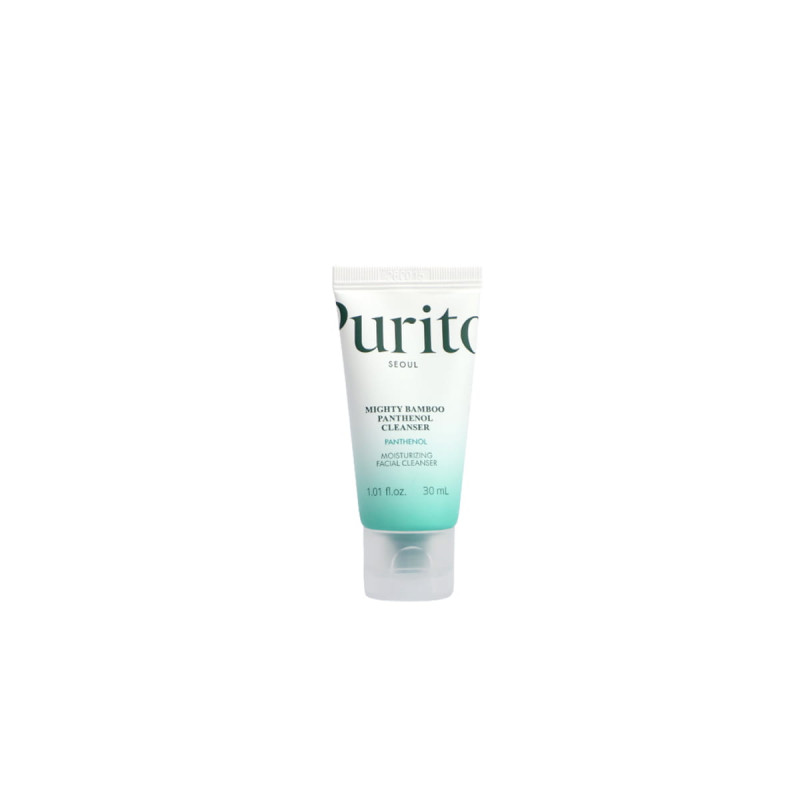
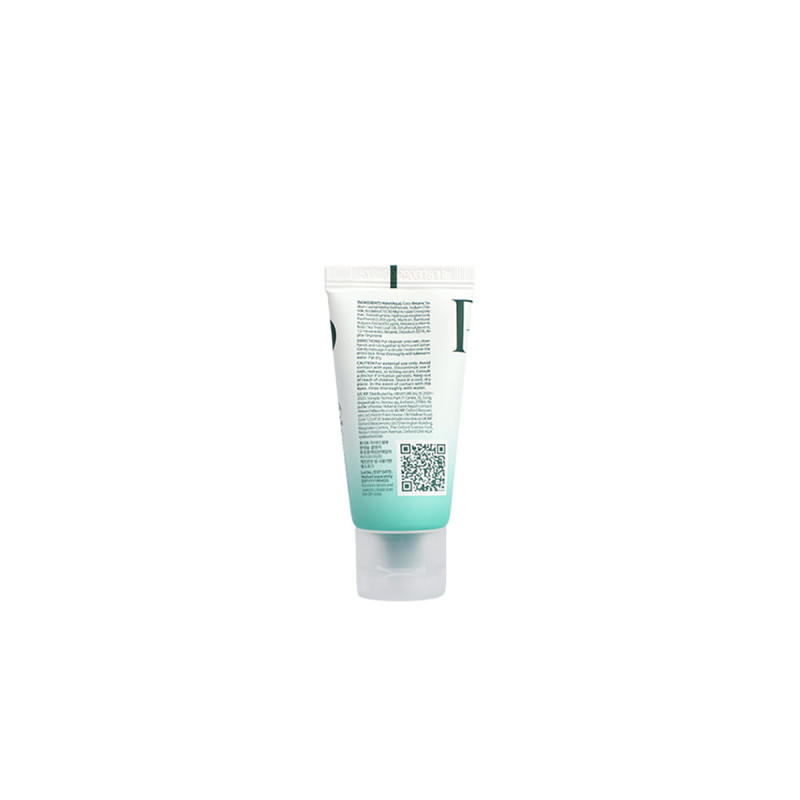
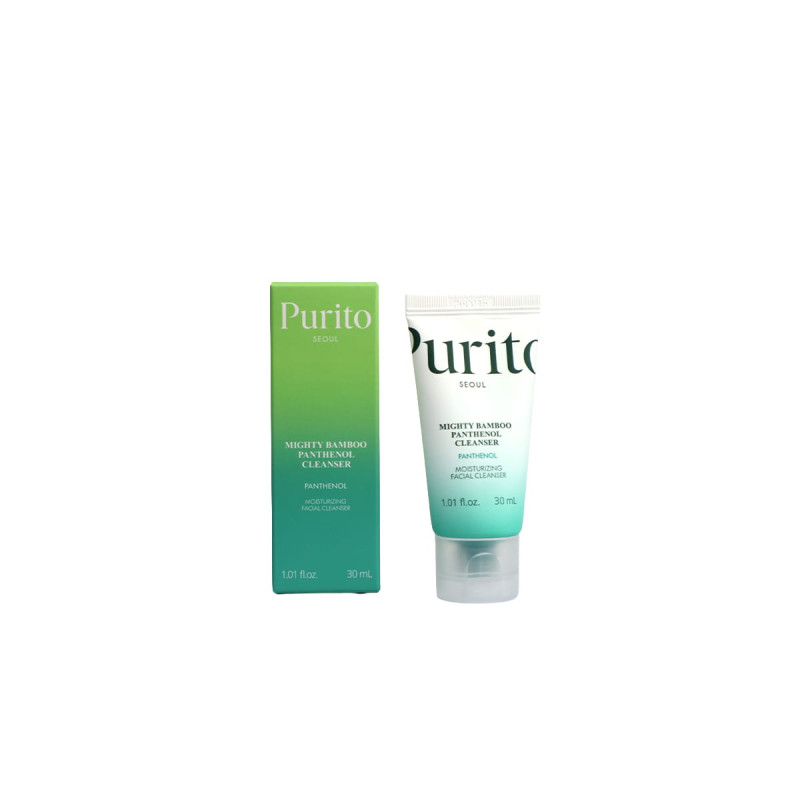
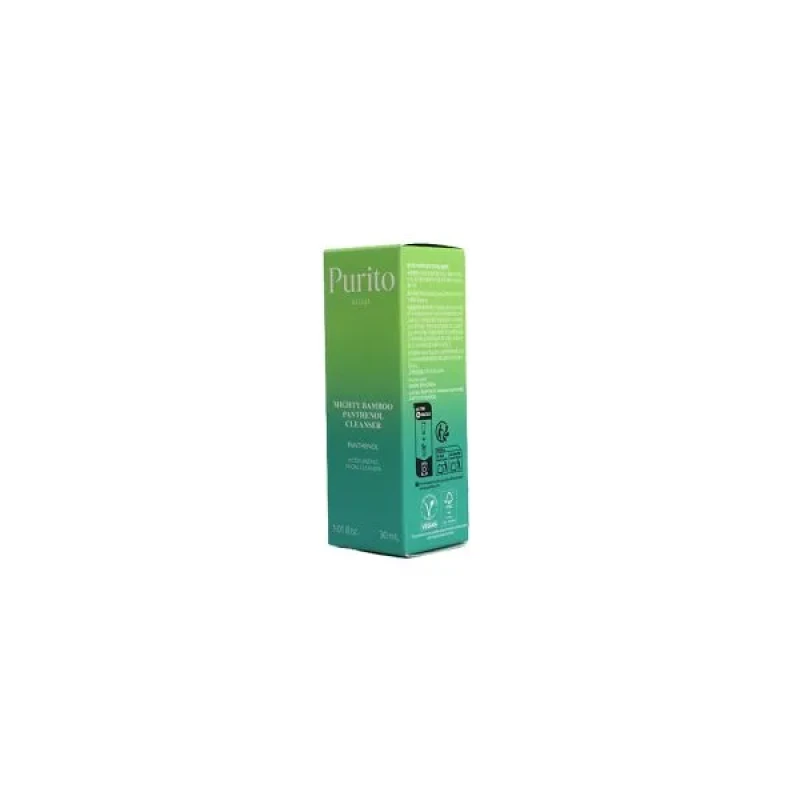
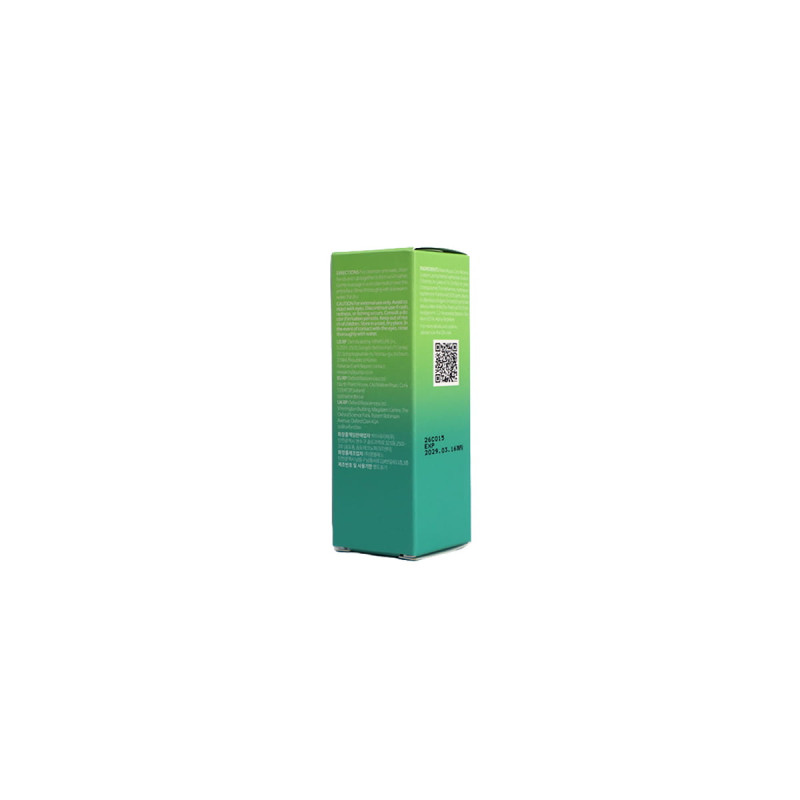
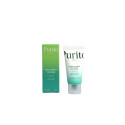
Purito Mighty Bamboo Panthenol Cleanser 30 ml
৳600
Purito Mighty Bamboo Panthenol Cleanser একটি জেন্টল, Low-pH ফেস ক্লেনজার। Panthenol, Bamboo Extract ও Allantoin সমৃদ্ধ ফর্মুলা ত্বকের ময়লা ও অতিরিক্ত তেল পরিষ্কার করে আর্দ্রতা ও স্কিন ব্যারিয়ার সাপোর্ট করে।
- Brand: The Face Shop
- Product Code:
- SKU: 8809563104307
- Availability: In Stock
Description
Purito Mighty Bamboo Panthenol Cleanser is a low-pH Korean gel cleanser in a 30ml tube, built on a 16-ingredient formula that declares two concentrations on the pack: panthenol at 3,000 ppm and bamboo extract at 50 ppm.
Those two numbers are 60 times apart, which tells you immediately which of the two named ingredients is doing the work. More importantly, the surfactant system contains no sulfate of any kind — an unusual and genuinely premium choice — and the ingredient list proves the low-pH claim rather than just asserting it. The three sections below explain both, along with one ingredient worth knowing about before you buy.
Table of Contents
- Product Overview
- A Cleanser With No Sulfate At All
- Why Low pH Matters, and How the List Proves It
- Reading the ppm Figures, and One Ingredient to Know About
- Key Benefits
- Key Ingredients and Their Positions
- Suitable Skin Types
- Texture and Skin Finish
- How to Use
- Recommended Skincare Routine
- Cleansing in Bangladesh
- Precautions and Storage
- Product Details
- Where to Buy in Bangladesh
- Official Product Information
- Frequently Asked Questions
Product Overview
Purito is a Seoul-based Korean skincare brand known for short ingredient lists and barrier-focused formulations. This is the Mighty Bamboo Panthenol Cleanser, a moisturising facial cleanser supplied here in a 30ml travel size.
The pack states the essentials plainly: a moisturising facial cleanser, with panthenol named as the hero ingredient.
What makes this product worth examining is that the ingredient list is only 16 items long and two of them carry declared concentrations. With that much disclosed, you can work out most of how the formula is built — which is rare, and which is how the analysis below is possible.
The short version: the cleansing system is better than its price suggests, the low-pH claim holds up under scrutiny, and the bamboo in the product name is a theme rather than an active.
A Cleanser With No Sulfate At All
Start with the two ingredients doing the actual cleaning, at positions 2 and 3:
- Coco-Betaine — position 2
- Sodium Lauroyl Methyl Isethionate — position 3
And now notice what is not there. No sodium lauryl sulfate. No sodium laureth sulfate. No fatty acid and alkali combination that would make soap. This cleanser contains no sulfate and no soap of any kind.
That is unusual, and it costs the manufacturer more than the alternative.
Why most “”gentle”” cleansers are not built this way
The standard approach to a mild cleanser is to use a sulfate as the primary workhorse — usually sodium laureth sulfate, which is cheap and foams generously — and then add a mild secondary surfactant such as cocamidopropyl betaine to soften its effect. The betaine partly complexes with the sulfate and measurably reduces its irritation potential.
That works, and it is how a great many perfectly good cleansers are made. But the harsh surfactant is still the main one; it is simply being managed.
Here, the mild surfactant is the main one.
What sodium lauroyl methyl isethionate is
It belongs to the isethionate family — the same chemical class used to build premium synthetic detergent bars, the kind marketed as gentle alternatives to soap. Isethionates are among the mildest anionic surfactants available.
Three properties matter:
- Low irritation potential. Isethionates consistently test as gentler than sulfates in standard irritation assessments.
- A dense, creamy lather rather than the big loose foam sulfates produce. Different, and preferred by many people once they get used to it.
- Good tolerance of hard water — relevant in Bangladesh, where soap-based cleansers struggle.
Coco-betaine at position 2 is an amphoteric surfactant, carrying both positive and negative charges. It boosts foam and contributes mild cleansing, and amphoterics are among the best-tolerated surfactants in use.
Together: two mild surfactants, no harsh one to manage. That is a structurally different and better starting point than a sulfate formula with mildness bolted on, and it is the main reason this cleanser should leave your skin feeling comfortable rather than stripped.
Sodium chloride at position 4 is ordinary salt, used to thicken surfactant solutions into a gel. It does nothing for your skin; it gives the product its texture.
Why Low pH Matters, and How the List Proves It
Purito describes this as a low-pH cleanser. That claim is made by a great many products, so it is worth knowing both why it matters and how to check it.
The acid mantle, and what alkaline washing does
Healthy skin maintains a surface pH of roughly 4.5 to 5.5 — mildly acidic. This is the acid mantle, and it is not a marketing concept. Research has established three concrete reasons it matters:
- The barrier-building enzymes need acidity. The enzymes that assemble ceramides in the outermost skin layer work optimally at acidic pH and slow down as pH rises. Raise skin pH and you slow ceramide production.
- The barrier-degrading enzymes prefer neutrality. Serine proteases, which break down the connections holding surface cells together, become more active at neutral and alkaline pH. So alkaline washing slows barrier construction and speeds barrier breakdown at the same time.
- Acidity suppresses the wrong bacteria. Skin’s beneficial residents tolerate acidity well, while several problem organisms — including Staphylococcus aureus — prefer neutral to alkaline conditions.
A soap bar sits at pH 9 to 10 and raises skin pH for roughly two to six hours after washing — longer in older or compromised skin. That is the mechanism behind the tight, squeaky feeling after a soap wash, and behind the finding that habitual alkaline cleansing is associated with higher resting skin pH.
How you can tell this formula is not alkaline
Two things in the ingredient list settle it.
First, what is absent. A cleanser only becomes alkaline one of two ways: it is a soap, or it has been deliberately raised with a strong base. Neither is present here. There is no fatty acid — no stearic, lauric or myristic acid — and no sodium or potassium hydroxide anywhere in the 16 ingredients. Without those, there is nothing in this formula capable of pushing it to pH 9.
Second, what is present:
- Acrylates/C10-30 Alkyl Acrylate Crosspolymer — position 5. A polymeric thickener, supplied as an acid, which must be neutralised before it will thicken.
- Tromethamine — position 6. The neutraliser for it.
And the choice of neutraliser is the telling detail. A formulator could use sodium hydroxide, which is cheap and effective — and which drives pH up hard. Tromethamine, also known as TRIS, is an amine buffer: it neutralises the polymer to a controlled, mild pH and then resists drift away from it. It is the ingredient you choose precisely when you want to land in a specific mild range rather than simply get the thickener working.
That is a deliberate pH-control decision, and it is the technical evidence behind the low-pH claim.
What this means for you in practice
- Less post-wash tightness. The squeaky feeling after washing is not cleanliness — it is a stripped, lipid-free surface with its pH disturbed. A low-pH cleanser with mild surfactants produces far less of it.
- Better for acids and actives. If you use a BHA, AHA or vitamin C, a low-pH cleanser does not leave your skin alkaline and partly neutralising what you apply next.
- Better for compromised skin. If your barrier is already struggling, the pH shift from an alkaline cleanser is one more thing it has to recover from twice a day.
- Better for acne-prone skin. Habitually raising skin pH shifts conditions in favour of organisms you would rather not encourage.
Reading the ppm Figures, and One Ingredient to Know About
Two concentrations are printed on the pack, and together they anchor the whole bottom half of the ingredient list.
Panthenol at 3,000 ppm — position 8
3,000 ppm is 0.3 per cent. In a 30ml tube that is roughly 90 milligrams of panthenol in total, and around 3 milligrams in a typical wash.
This is a genuinely sensible inclusion, because panthenol is one of the few ingredients that does something in a rinse-off product. It is a small, substantive molecule — provitamin B5, converting to pantothenic acid in the skin — and it binds water and deposits reasonably well even with brief contact.
The honest limit: research on panthenol for barrier function generally uses 1 to 5 per cent in leave-on products. At 0.3 per cent in something you rinse off after thirty seconds, the realistic effect is reducing the stripped feeling after washing — which is a real, noticeable difference — rather than repairing your barrier. Your moisturiser does the barrier work.
And the anchor it provides: everything from position 9 downward is present at 0.3 per cent or less.
Bamboo extract at 50 ppm — position 10
50 ppm is 0.005 per cent. In a 30ml tube that is 1.5 milligrams — roughly twenty-five grains of table salt dissolved through the entire product. Per wash, about fifty micrograms.
The product is called Mighty Bamboo, and the panthenol is present at sixty times the concentration of the bamboo. The bamboo is a range name and a theme. It is declared truthfully, it is genuinely in there, and it is not what the product does.
That is not a criticism — it is simply worth knowing which of the two named ingredients you are actually buying. The panthenol is the one, and 0.3 per cent of it in a cleanser is a reasonable thing to pay for.
And the tighter anchor this creates
Everything from position 11 downward is present at 50 ppm or less — a tiny ceiling across the final six ingredients. That covers tea tree oil, ethylhexylglycerin, 1,2-hexanediol, betaine, disodium EDTA and alpha-terpinene.
Which clarifies two things at once.
Betaine is a trace. It is sometimes described alongside panthenol as part of a moisturising trio; at 50 ppm or less it is not doing meaningful work. The moisture claim rests on panthenol at 0.3 per cent, with allantoin at position 9 — between the two anchors, so plausibly in the 0.1 to 0.2 per cent range where allantoin is normally used — as a genuine supporting soothing ingredient.
And the tea tree oil is at 50 ppm or less. Which matters a great deal for the next part.
Tea tree oil: worth knowing about, not worth panicking over
Position 11 is Melaleuca Alternifolia (Tea Tree) Leaf Oil, and position 16 is Alpha-Terpinene, one of tea tree oil’s own constituents, declared separately.
The honest facts, stated plainly:
- Tea tree oil is a recognised contact allergen and appears in dermatological patch test series. It is not a hypothetical concern.
- It becomes substantially more allergenic as it oxidises. Fresh tea tree oil is a relatively weak sensitiser; oxidised tea tree oil is a considerably stronger one. The oxidation products, not the fresh oil, are the main culprits — and alpha-terpinene is among the constituents most prone to oxidising, which is very likely why it is declared separately.
- “”No synthetic fragrance”” is not the same as fragrance-free. Natural essential oils can be more sensitising than synthetic fragrance, not less. A product can honestly claim no synthetic fragrance while containing a botanical allergen.
Now the reassuring half, which is the larger half. The bamboo anchor caps tea tree oil at 50 ppm — 0.005 per cent, meaning at most about 1.5 milligrams in the whole tube. Studies on tea tree oil irritation and sensitisation use concentrations orders of magnitude higher. And this is a rinse-off product with perhaps thirty seconds of contact.
For the overwhelming majority of people this will be a complete non-issue. It may even be a small positive — tea tree oil has genuine antimicrobial activity relevant to acne-prone skin, though at this concentration that effect is also minimal.
Who should pay attention: anyone with a confirmed tea tree oil allergy, anyone who has reacted to essential oils before, and anyone looking for a truly fragrance-free product for medically sensitive skin. For those people, this is not the cleanser, and that is worth knowing before buying rather than after.
And one practical consequence that applies to everyone. Because oxidised tea tree oil is the more allergenic form, storage matters: keep the tube closed, store it away from heat and sunlight, and use it within the period after opening rather than keeping it for years.
A note on the preservation
Worth observing, since it follows from the same anchor. 1,2-hexanediol and ethylhexylglycerin both sit below the 50 ppm line, which is far too low for either to preserve anything on its own — they are normally used at several thousand ppm for that purpose.
The preservation here rests mainly on hydroxyacetophenone at position 7, above the 0.3 per cent panthenol, supported by disodium EDTA, which chelates the trace metals that would otherwise undermine it. A surfactant-rich cleanser is also an inhospitable environment for microbes to begin with.
That is an adequate system for a cleanser, but a lean one. Keep the cap closed, do not let the nozzle touch your face, and use it within a reasonable period.
Key Benefits
- No sulfate and no soap anywhere in the formula — the cleansing is done by two genuinely mild surfactants rather than a harsh one with mildness added
- Sodium lauroyl methyl isethionate as the primary cleanser — an isethionate, the same family used in premium synthetic detergent bars, among the mildest anionic surfactants available and more expensive than a sulfate
- Verifiable low pH — no soap system and no strong alkali anywhere in the list, with an acrylates crosspolymer neutralised by tromethamine, a buffering amine chosen specifically for controlled mild pH
- Protects the acid mantle — keeping skin pH near its natural 4.5 to 5.5 supports the enzymes that build ceramides and limits the ones that break the barrier down
- Panthenol at 3,000 ppm, declared on the pack — one of the few ingredients that deposits meaningfully from a rinse-off product
- Allantoin at a plausible working level — a genuine soothing ingredient, not a trace
- Only 16 ingredients — fewer variables to irritate reactive skin, and fewer suspects if something does
- Transparent labelling — the brand prints exact ppm figures for both named ingredients rather than leaving them unstated
- No synthetic fragrance
- Works well in hard water — isethionates tolerate dissolved calcium and magnesium far better than soap, which forms scum
- Layers properly with acids — a low-pH cleanser does not leave skin alkaline and partly neutralising a BHA or vitamin C applied afterwards
- Dermatologist-tested for primary skin irritation, as reported by the manufacturer
Key Ingredients and Their Positions
Positions refer to the ingredient declaration, of 16 ingredients total.
Coco-Betaine — position 2. An amphoteric surfactant carrying both positive and negative charges. Boosts foam and cleans mildly. Amphoterics are among the best-tolerated surfactants in cosmetic use.
Sodium Lauroyl Methyl Isethionate — position 3. The primary cleansing surfactant, and the formula’s standout choice. An isethionate — the chemical family behind premium synthetic detergent bars — consistently gentler than sulfates, producing a dense creamy lather, and notably tolerant of hard water.
Sodium Chloride — position 4. Ordinary salt, used to thicken surfactant solutions into a gel. Contributes texture, nothing else.
Acrylates/C10-30 Alkyl Acrylate Crosspolymer — position 5, with Tromethamine — position 6. A polymeric thickener and its neutraliser. Tromethamine is a buffering amine rather than a strong base, which is the deliberate choice behind the controlled low pH.
Hydroxyacetophenone — position 7. Above the 0.3 per cent panthenol, so present at a meaningful level. An antioxidant that also carries the main preservative load in this formula.
Panthenol — position 8, declared at 3,000 ppm (0.3%). Provitamin B5, converting to pantothenic acid in the skin. A humectant and skin-conditioning agent that is small and substantive enough to deposit from a rinse-off product. The ingredient responsible for the comfortable post-wash feel.
Allantoin — position 9. Between the two declared anchors, so under 0.3 per cent but plausibly in the 0.1 to 0.2 per cent range where allantoin normally works. A genuine soothing and skin-conditioning ingredient at that level.
Bambusa Vulgaris Extract — position 10, declared at 50 ppm (0.005%). The range’s namesake, at roughly 1.5 milligrams in the whole tube. A theme ingredient, honestly declared. Also the anchor proving everything below it is at 50 ppm or less.
Melaleuca Alternifolia (Tea Tree) Leaf Oil — position 11, and Alpha-Terpinene — position 16. Below the 50 ppm line. Tea tree oil is a recognised contact allergen whose sensitising potential increases as it oxidises; alpha-terpinene is one of its oxidation-prone constituents, declared separately. At this concentration in a rinse-off product the risk is minimal for most people — see the precautions if you have a known essential oil sensitivity.
Ethylhexylglycerin 12, 1,2-Hexanediol 13, Betaine 14, Disodium EDTA 15. All below 50 ppm. The EDTA earns its place by chelating trace metals and supporting the preservation; the others are present at levels too low to contribute meaningfully.
Suitable Skin Types
- Dry skin — a sulfate-free, low-pH cleanser is exactly the right category, and the panthenol reduces post-wash tightness
- Dehydrated skin — the mild surfactants remove less of the skin’s own lipids
- Sensitive or reactive skin — a strong candidate overall, with 16 ingredients, no sulfate, no soap and no synthetic fragrance. The one caveat is the tea tree oil; see below.
- Normal skin — a straightforward daily cleanser
- Combination skin — cleans the oilier zones without stripping the drier ones
- Oily skin — cleans effectively. Worth knowing that over-stripping oily skin often prompts more oil production, so a gentler cleanser can help rather than hinder.
- Acne-prone skin — the low pH suits it, and it will not aggravate skin already being treated with actives
- Anyone using acids, retinoids or vitamin C — particularly well suited. A low-pH cleanser does not leave your skin alkaline and partly neutralising what you apply afterwards.
- Compromised or over-exfoliated barrier — a sensible cleanser while recovering
- Known tea tree oil or essential oil sensitivity — not recommended. Choose a genuinely fragrance-free cleanser instead.
- Medically sensitive skin needing a truly fragrance-free product — this is not it. “”No synthetic fragrance”” is not the same as fragrance-free.
Best suited for: dry, sensitive, dehydrated or actives-using skin wanting a mild low-pH cleanser — provided you have no history of reacting to essential oils.
Texture and Skin Finish
In the tube: a lightweight, semi-transparent gel.
Lathering: a dense, creamy foam rather than the big airy bubbles a sulfate produces. Different if you are used to foaming sulfate cleansers, and worth adjusting to — lather volume is a poor guide to cleaning power and a good guide to how stripping a cleanser will be.
Rinsing: clean and complete, with no slippery residue.
The finish: comfortable rather than tight. Your skin should not squeak after washing. A squeak means the surface has been stripped bare of its lipids — it feels like cleanliness and is actually the opposite of what you want.
Scent: no synthetic fragrance. There may be a faint herbal note from the tea tree oil, though at 50 ppm or less it is barely perceptible.
How to Use
- Wet your face with lukewarm water, not hot. Hot water strips lipids far more than any cleanser does and is the bigger cause of post-wash dryness.
- Dispense a small amount — around a pea-sized quantity — into your palm.
- Emulsify it with a little water first. Neat gel applied straight to the face distributes poorly and you end up using more than you need.
- Apply to damp skin and massage gently with your fingertips in small circles.
- Spend a little more time on the forehead, nose and chin if those areas are oilier.
- Keep it to about thirty seconds. Longer does not clean better; it only increases how much of your own lipids come off with the dirt.
- Avoid the immediate eye area.
- Rinse thoroughly with lukewarm water.
- Pat dry, leaving the skin slightly damp — do not rub with a towel.
- Apply toner, serum and moisturiser while the skin is still slightly damp. Humectants work best when there is water available to bind.
Frequency: twice daily suits most people. If your skin is dry, consider water only in the morning and this cleanser in the evening — a common and sensible adjustment that many people find solves their morning tightness entirely.
One important note on sunscreen and makeup. This is a water-based cleanser, and water-based cleansers do not remove water-resistant sunscreen or long-wear makeup properly. Use a cleansing oil or balm first, then this as your second cleanse. That is how the double cleanse works, and skipping the first step is a common cause of congestion in people who otherwise have a good routine.
Patch test first if you have ever reacted to essential oils. A few days on the inner forearm or along the jawline.
Recommended Skincare Routine
Morning
- Purito Mighty Bamboo Panthenol Cleanser, or water alone if your skin is dry
- Toner
- Serum, if used
- Moisturiser
- Broad-spectrum sunscreen SPF 30+
Evening
- Cleansing oil or balm — essential if you wore sunscreen or makeup
- Purito Mighty Bamboo Panthenol Cleanser
- Toner
- Treatment serum, acid or retinoid, if used
- Moisturiser
For Dry or Tight-Feeling Skin
Cleanse once a day rather than twice — water alone in the morning, this cleanser at night. Keep the massage to thirty seconds, use lukewarm water, and apply your moisturiser while the skin is still damp. If your skin still feels tight after a week, the problem is almost certainly water temperature or washing frequency rather than the cleanser.
If You Use Acids, Retinoids or Vitamin C
This is one of the better cleansers to pair with actives. A low-pH cleanser leaves your skin surface near its natural pH rather than alkaline, which means a BHA or vitamin C applied afterwards is working in the conditions it was formulated for. With an alkaline cleanser, part of the acid is neutralised before it can act.
The old advice to wait twenty or thirty minutes after cleansing before applying an acid largely came from this problem. With a low-pH cleanser it is unnecessary — just pat dry and proceed.
For Oily Skin
Resist the urge to over-cleanse. Stripping oily skin frequently prompts it to produce more oil, which is why many people with oily skin find a gentler cleanser improves things rather than making them worse. Twice daily, thirty seconds, lukewarm water, and a light moisturiser afterwards — oily skin can still be dehydrated.
Habits That Matter More Than Products
- Lukewarm water, never hot. The single most common cause of post-cleanse dryness.
- Thirty seconds is enough.
- Do not aim for squeaky. It is a sign of over-cleansing, not of cleanliness.
- Oil cleanse first if you wore sunscreen or makeup.
- Moisturise on damp skin, within about three minutes.
- Pat, never rub. Friction on the face contributes to pigmentation over time, particularly in skin that marks easily.
Cleansing in Bangladesh
This cleanser handles hard water far better than soap does, and that is a practical advantage here. Water across much of Bangladesh carries dissolved calcium and magnesium, and soap reacts chemically with those minerals to form calcium stearate — soap scum — which deposits on the skin as a filmy, slightly draggy residue that no amount of extra rinsing removes. Synthetic surfactants like the isethionate in this formula do not react with calcium at all. If you have been blaming your cleanser for a filmy feeling after washing, hard water and soap chemistry are the likelier culprits.
Heat and sweat make over-cleansing tempting. In high humidity it feels natural to wash the face repeatedly through the day, but over-cleansing strips the barrier and ultimately makes oiliness worse. Rinse with plain water during the day and keep actual cleansing to twice daily.
Dust and pollution in urban areas settle on the skin and make an evening cleanse genuinely necessary — but that is an argument for cleansing properly once, not for cleansing four times.
Sunscreen needs an oil cleanse. Daily sunscreen is essential in this UV load, and a water-based cleanser alone does not remove it properly. The residue left behind is a common and avoidable cause of congestion. Oil cleanse first, then this.
Storage matters more here than in a temperate climate, for two reasons specific to this product. The preservation is lean, and heat shortens its margin. And oxidised tea tree oil is more allergenic than fresh — heat and light accelerate that oxidation. Keep the tube in a closed cabinet rather than on a sunny shelf, keep the cap on, and use it within the period after opening.
Precautions and Storage
- For external use on the face only.
- Avoid the immediate eye area. If the cleanser enters the eyes, rinse immediately with plenty of clean water.
- Contains tea tree leaf oil at position 11 and alpha-terpinene at position 16. Tea tree oil is a recognised contact allergen and its sensitising potential increases as it oxidises. Both sit below the 50 ppm line, so the risk is minimal for most people in a rinse-off product — but anyone with a known tea tree oil or essential oil sensitivity should avoid this cleanser.
- “”No synthetic fragrance”” is not the same as fragrance-free. If you need a genuinely fragrance-free cleanser for medically sensitive skin, this is not it.
- Patch test for a few days on the inner forearm or jawline before full use if you have reactive skin or a history of contact dermatitis.
- Do not apply to broken, wounded or severely irritated skin.
- Discontinue use if persistent redness, itching, stinging or dryness develops, and consult a doctor if it continues.
- Use lukewarm water, not hot, and keep cleansing to about thirty seconds. Both do more for post-wash comfort than the choice of cleanser.
- Your skin should not squeak after washing. If it does, you are over-cleansing — reduce frequency, lower the water temperature, or use less product.
- This is a water-based cleanser and will not remove water-resistant sunscreen or long-wear makeup on its own. Use a cleansing oil or balm first.
- Preservation here is lean, resting mainly on hydroxyacetophenone with EDTA support. Keep the cap closed, avoid touching the nozzle to skin, and use within the period after opening rather than keeping it for years.
- Store away from heat and direct sunlight. This matters particularly here, because oxidised tea tree oil is the more allergenic form and heat accelerates oxidation.
- Follow with a moisturiser, applied while the skin is still slightly damp.
- Keep out of reach of children.
- Check the packaging for the expiry date, period-after-opening symbol and full ingredient declaration.
Product Details
| Product Name | Purito Mighty Bamboo Panthenol Cleanser |
|---|---|
| Brand | Purito Seoul |
| Product Range | Mighty Bamboo |
| Product Type | Low-pH Moisturising Gel Facial Cleanser |
| Available Size | 30ml |
| Primary Surfactant | Sodium Lauroyl Methyl Isethionate (position 3) — an isethionate, not a sulfate |
| Secondary Surfactant | Coco-Betaine (position 2) — amphoteric |
| Contains Sulfate | No |
| Contains Soap | No — no fatty acid or strong alkali anywhere in the formula |
| pH Control | Acrylates crosspolymer neutralised with Tromethamine, a buffering amine |
| Panthenol | 3,000 ppm (0.3%), declared on pack — approximately 90mg in a 30ml tube |
| Bamboo Extract | 50 ppm (0.005%), declared on pack — approximately 1.5mg in a 30ml tube |
| Allantoin | Position 9 — between the two declared anchors, so plausibly at a working level |
| Total Ingredients | 16 |
| Preservation | Hydroxyacetophenone with Disodium EDTA support — no phenoxyethanol, no parabens |
| Synthetic Fragrance | None |
| Essential Oil | Yes — Tea Tree Leaf Oil (position 11), at or below 50 ppm |
| Testing | Dermatologist-tested for primary skin irritation, per the manufacturer |
| Main Benefits | Gentle cleansing, reduced post-wash tightness, acid mantle support, skin conditioning |
| Recommended Skin Types | Dry, sensitive, dehydrated, normal, combination, oily and acne-prone; avoid with essential oil sensitivity |
| Texture | Lightweight semi-transparent gel producing a dense creamy lather |
| Frequency | Twice daily; once daily for dry skin |
| Essential Companion Step | A cleansing oil or balm first, if you wore sunscreen or makeup |
| Country of Origin | South Korea |
| Product SKU | PRODUCT_SKU_HERE |
| Storage | Cool, dry place away from heat and sunlight; keep the cap closed |
Where to Buy in Bangladesh
Purito Mighty Bamboo Panthenol Cleanser is available at KC Bazar, Bangladesh’s trusted source for authentic Korean skincare. Every product we stock is imported through proper channels, so you receive genuine Purito packaging with the full ingredient declaration and batch information intact.
Order Purito Mighty Bamboo Panthenol Cleanser from KC Bazar
Supplied in a 30ml tube — a practical size for travel, or for trying a cleanser before committing to a full-size bottle. If your current cleanser leaves your face feeling tight and squeaky, this is a good one to test the difference with: no sulfate, no soap, and a pH that does not disturb your skin’s own.
We deliver nationwide across Bangladesh, and you can also visit any of our showrooms. One thing worth mentioning to our team before you buy: if you have ever reacted to essential oils, this formula contains tea tree oil, and we can point you to a genuinely fragrance-free cleanser instead.
Official Product Information
The tube and carton identify the product as Purito Mighty Bamboo Panthenol Cleanser, a moisturising facial cleanser, with panthenol named as the featured ingredient. Volume is printed as 30ml.
The ingredient declaration on the pack states panthenol at 3,000 ppm and Bambusa vulgaris extract at 50 ppm. The manufacturer describes the product as a low-pH cleanser free from synthetic fragrance, and reports completed dermatological testing for primary skin irritation and sensitive skin suitability. The brand is Purito, based in Seoul, South Korea.
Ingredient declarations and pack details can vary between batches, packaging versions and export markets. Always refer to the full declaration, expiry date, period-after-opening symbol and directions printed on the product you receive.
Frequently Asked Questions
1. Is this cleanser sulfate-free?
Yes, completely — and it goes further than that. There is no sulfate of any kind, and no soap either, since the formula contains no fatty acid and no strong alkali. The cleansing is done by coco-betaine and sodium lauroyl methyl isethionate, two genuinely mild surfactants. Most “”gentle”” cleansers still use a sulfate as the workhorse and add a mild surfactant to soften it; here the mild one is the workhorse.
2. What makes sodium lauroyl methyl isethionate better than a sulfate?
It belongs to the isethionate family — the same chemistry used in premium synthetic detergent bars sold as gentle alternatives to soap. Isethionates consistently test as less irritating than sulfates, produce a dense creamy lather rather than big airy foam, and tolerate hard water far better. They also cost the manufacturer considerably more.
3. How do I know the low-pH claim is real?
From what the ingredient list does and does not contain. A cleanser only becomes alkaline by being a soap or by being raised with a strong base — and neither is present in these 16 ingredients. There is no fatty acid, no sodium or potassium hydroxide. Instead the thickening polymer is neutralised with tromethamine, a buffering amine specifically chosen when you want a controlled mild pH rather than simply getting the thickener to work.
4. Why does cleanser pH matter?
Healthy skin sits at pH 4.5 to 5.5, and that acidity is functional. The enzymes that build ceramides in your barrier work best in acidic conditions and slow as pH rises, while the enzymes that break the barrier down become more active at neutral and alkaline pH. So an alkaline cleanser slows barrier construction and speeds its breakdown at the same time. A soap bar sits at pH 9 to 10 and raises your skin pH for hours afterwards — that is what the tight, squeaky feeling is.
5. How much bamboo is actually in it?
50 ppm, which is 0.005 per cent — about 1.5 milligrams in the whole 30ml tube, roughly twenty-five grains of salt dissolved through the entire product. The panthenol, by comparison, is at 3,000 ppm, sixty times higher. The bamboo is the range name and a theme; the panthenol is what you are actually buying, and 0.3 per cent of it in a cleanser is a reasonable thing to pay for.
6. Is the tea tree oil a problem?
For most people, no. Tea tree oil is a recognised contact allergen and it becomes more allergenic as it oxidises, which is why alpha-terpinene — one of its oxidation-prone constituents — is declared separately. But it sits below the bamboo at 50 ppm, meaning about 1.5 milligrams in the whole tube, in a product you rinse off after thirty seconds. That said, if you have ever reacted to essential oils, choose a genuinely fragrance-free cleanser instead — “”no synthetic fragrance”” is not the same as fragrance-free, and natural essential oils can be more sensitising, not less.
7. Will it remove my sunscreen and makeup?
Not on its own. This is a water-based cleanser and water-based cleansers do not fully remove water-resistant sunscreen or long-wear makeup. Use a cleansing oil or balm first, then this as your second cleanse. Skipping that first step is one of the most common avoidable causes of congestion in people who otherwise have a sensible routine.
8. My skin feels tight after washing. Is the cleanser wrong for me?
Possibly, but check three other things first. Hot water strips lipids far more than any cleanser does — use lukewarm. Keep the massage to about thirty seconds rather than a minute or two. And apply your moisturiser while your skin is still slightly damp rather than fully dry. If tightness persists after a week of that, try cleansing only in the evening and using water alone in the morning, which solves it for a lot of people with dry skin.
Food & Supplement


6 Years Red Ginseng Extract 365 Gold 240g
৳1,750 ৳2,200 Ex Tax: ৳1,750


